Toolbox talk topics: 22 safety briefing ideas with talking points
Good toolbox talk topics are short, specific and tied to the work about to start: working at height, line of fire, energy isolation, hot work, lifting, heat stress, manual handling, chemicals, driving and stop-work authority are the core set. Keep each talk to 5 to 15 minutes, ask the crew questions, and record who attended.

What a toolbox talk is, and how to run one
A toolbox talk (also called a safety briefing, tailgate talk or pre-start talk) is an informal, short session where a supervisor and the crew discuss one safety topic that matters for the work in front of them. It is not a lecture and it does not replace formal training, a permit or a risk assessment. It reminds people of the hazards and controls, and gives them a chance to speak up before work starts.
Under the Occupational Safety and Health Act 1994, employers must provide the information, instruction, training and supervision needed for safe work, and since 1 June 2024 they must also carry out and implement a risk assessment (see our OSHA amendment 2022 guide). A regular, recorded toolbox talk is one of the simplest ways to show both are happening on the ground.
A format that works:
- Gather at the job, out of the noise, everyone able to see and hear. Run it in the language the crew uses; on many Malaysian sites that means Bahasa Malaysia plus another language, so bring an interpreter if needed.
- State the topic and why today: "We are lifting the pump this morning, so let's talk about the drop zone."
- Cover 2 to 4 points, using the real equipment and location as props.
- Ask questions: "What could go wrong here? What would make you stop the job?"
- Close with actions and record attendance. Feed any concerns into the HIRARC or the permit.
Toolbox talk topics for high-risk work
1. Working at height
- Edge protection first; harness and lanyard only where guardrails are not possible.
- Check anchor points and inspect the harness before every use.
- Have a rescue plan: a person hanging in a harness needs help within minutes.
Practise: Working at Height
2. Scaffolds and ladders
- Only use a scaffold with a valid inspection tag; never alter one yourself.
- Ladders are for short-duration access: three points of contact, tied or footed, extend above the landing.
- Keep platforms clear of loose materials and tools.
Practise: Scaffolding (Erection & Inspection)
3. Line of fire and dropped objects
- Never stand under a suspended load or between a moving object and something fixed.
- Tether tools at height; keep toe boards in place.
- Watch for stored energy: springs, tensioned cables, pressurised hoses.
Practise: Line of Fire & Dropped Objects
4. Permit to work
- Read the permit before starting: scope, hazards, controls, gas test, expiry.
- If the job changes, stop and get the permit revalidated.
- Hand back the permit and leave the area safe at the end of the shift.
Practise: Permit to Work & Risk Assessment
5. Energy isolation (LOTO)
- Isolate every energy source: electrical, mechanical, hydraulic, pneumatic, process.
- Your own lock, your own key, on every isolation point.
- Try to start the equipment to prove it is dead before you touch it.
Practise: Energy Isolation (LOTO)
6. Confined space entry
- No entry without a permit, gas test and standby person at the entrance.
- Test the atmosphere before and during entry; low oxygen gives no warning.
- Most confined space deaths include would-be rescuers: never go in after a collapsed person without breathing apparatus.
Practise: Confined Space Entry
7. Hot work
- Clear or cover combustibles around the job, including below gratings.
- Fire watch during the work and for a period after it ends.
- Gas test where flammables may be present; keep an extinguisher at hand.
Practise: Hot Work
8. Lifting and rigging
- Check the lift plan, load weight and the rigging inspection tags.
- One signaller, agreed signals, barricaded drop zone.
- Use tag lines; never put hands on a load as it lands.
Practise: Lifting & Rigging
9. Electrical safety
- Only authorised people work on electrical systems.
- Inspect extension leads and plugs; take damaged ones out of use.
- Keep cables away from water and vehicle routes.
Practise: Electrical Safety
Toolbox talk topics for everyday hazards
10. Manual handling
- Assess the load first: weight, shape, distance, route.
- Use a trolley, hoist or a second person before lifting heavy items.
- Keep the load close, bend the knees, do not twist.
Practise: Manual Handling & Ergonomics
11. Chemicals and safety data sheets
- Read the label and SDS before using a chemical you are not familiar with.
- Use the PPE the SDS specifies and know where the eyewash is.
- Never decant into unlabelled containers.
Practise: Chemicals & H2S
12. Hand and power tools
- Right tool for the job; inspect before use.
- Keep guards on grinders; match the disc to the tool's speed.
- Disconnect power before changing blades or bits.
Practise: Hand & Power Tools
13. Mobile plant and vehicles on site
- Make eye contact with the operator before walking near a machine.
- Keep to pedestrian routes; know the machine's blind spots.
- Reversing vehicles need a banksman where visibility is poor.
Practise: Heavy Equipment & Mobile Plant
14. Fire safety and emergency response
- Know the nearest exit, alarm point and muster point for today's location.
- Use an extinguisher only on a small fire with a clear escape behind you.
- Never block fire doors or exits with materials.
Practise: Fire Safety
15. Housekeeping, slips and trips
- Clean as you go; clear walkways and stairs.
- Report and barricade spills and holes straight away.
- Route hoses and cables so they do not cross walkways.
Practise: Construction Site
Toolbox talk topics on health and wellbeing
16. Heat stress and lightning
- Drink water regularly, before you feel thirsty; take rest breaks in shade.
- Know the signs of heat exhaustion and heat stroke: confusion, hot skin and collapse are an emergency.
- New and returning workers need time to acclimatise. When thunder is heard, stop outdoor work at height or in the open and take shelter.
Practise: Heat Stress & Lightning
17. First aid and CPR
- Who are today's first aiders and where is the first aid box and AED?
- Check for danger before helping; call for help early.
- Report every injury, however small.
Practise: First Aid & CPR
18. Fatigue and mental wellbeing
- Fatigue slows reactions and clouds judgement; tell your supervisor if you are not fit for work.
- Watch out for colleagues who seem withdrawn or unusually stressed and check in.
- Know how to reach support such as an employee assistance programme, if your employer has one.
Practise: Wellbeing & Mental Health
19. Driving safety
- Plan journeys and rest breaks; do not drive when drowsy.
- No phone use while driving; wear seat belts in every seat.
- Before festive balik kampung trips, check tyres, brakes and lights.
Practise: Driving Safety
Toolbox talk topics on safety culture
20. Stop work authority and speaking up
- Anyone can stop a job they believe is unsafe, without blame.
- Under section 26A of the OSH Act 1994, an employee who has informed the employer of an imminent danger may remove themselves from it if the employer fails to act.
- Practise the words: "Stop. I am not comfortable with this. Can we check?"
Practise: Speak Up & Stop Work
21. Near misses and incident reporting
- A near miss is a free lesson: report it the same day.
- Describe what happened, not who to blame.
- Share what changed afterwards so people see reports lead to action.
Practise: Incident Investigation & Root Cause
22. Human factors: complacency and shortcuts
- Routine jobs are where people stop noticing hazards.
- Time pressure is the most common reason for a shortcut; say so when the schedule is unrealistic.
- Use checklists for critical steps, even if you have done them a hundred times.
Practise: Human Factors
Making toolbox talks stick
- Rotate presenters. Ask a worker to lead the talk on a task they know well.
- Use real examples. A near miss from last week on this site beats a generic story.
- Keep it short. One topic, one message. Long talks lose people.
- Check understanding. Ask someone to explain the control back to you.
- Close the loop. If the crew raises a concern, tell them at the next talk what was done about it.
- Follow up with practice. After the talk, crews can play the matching WorkQuest2U lesson on a phone or PC: each one is a 3D scene where staff spot the hazards and choose the right control, so the talking points turn into decisions rather than slides.
Recording toolbox talks
Keep a simple record of every talk: date, time and location, topic and key points, presenter, names and signatures of attendees, questions or concerns raised, and actions with an owner and due date. File it with your training records so it is easy to show during an inspection or audit.
Download our free toolbox talk record sheet: one printable A4 page with space for 20 attendees, the talking points and follow-up actions.
Free toolbox talk record sheet (printable, A4)
Topic, talking points, attendance and signatures for 20 people, concerns raised and follow-up actions. Print it or save as PDF; no sign-up.
Practise it in WorkQuest2U
Short 3D lessons where staff walk the scene, spot the issues and make the calls. Free to try, with certificates and progress records for companies.
 Health, Safety, Security & EnvironmentWorking at HeightScaffolds, ladders, harnesses, MEWPs, dropped objects and rescue: how to stop a fall before it happens.
 Health, Safety, Security & EnvironmentLine of Fire & Dropped ObjectsMoving loads, stored energy, pinch points, dropped objects and vehicles: learn to ask "where will it go if it fails?" and step out of the path.
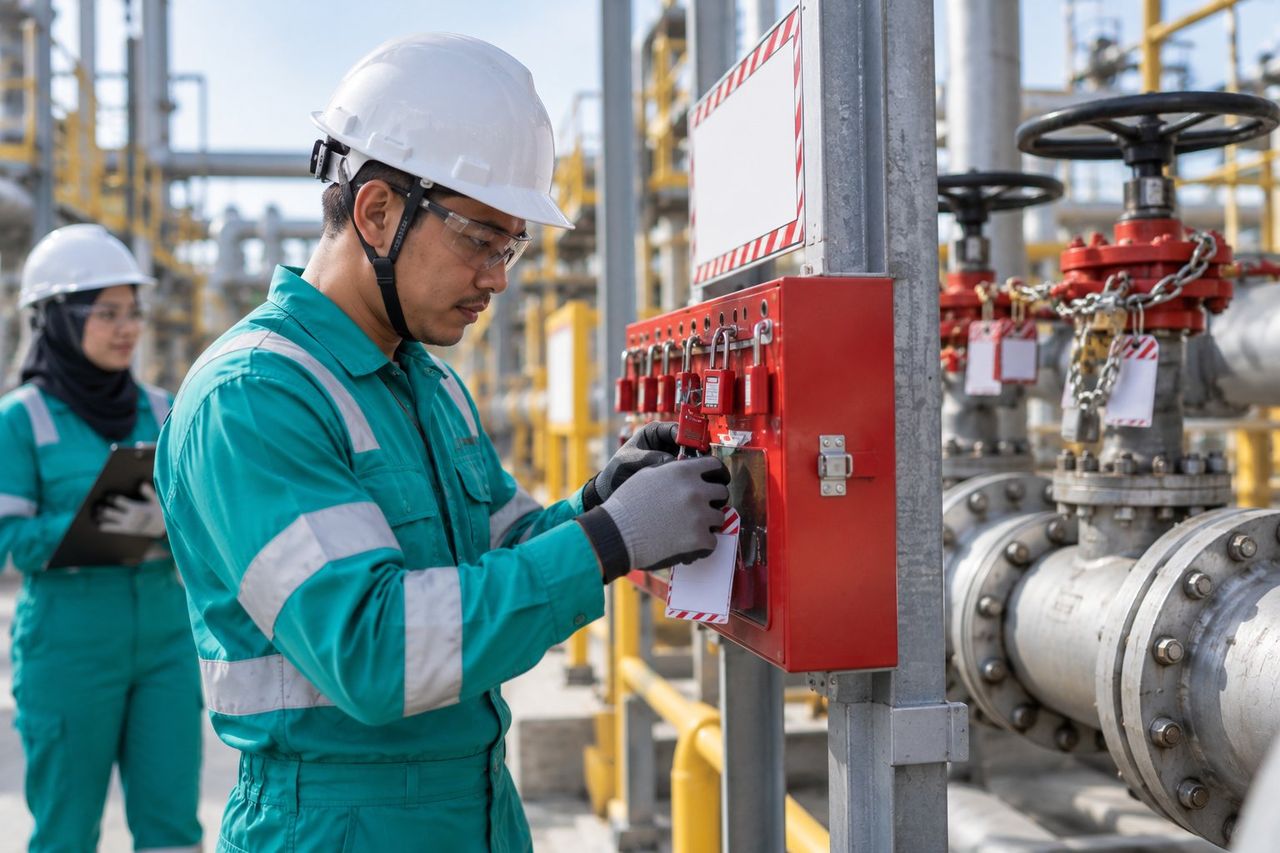 Health, Safety, Security & EnvironmentEnergy Isolation (LOTO)Lock, tag, try: find every energy source, isolate it, lock it and prove zero energy before anyone touches the equipment.
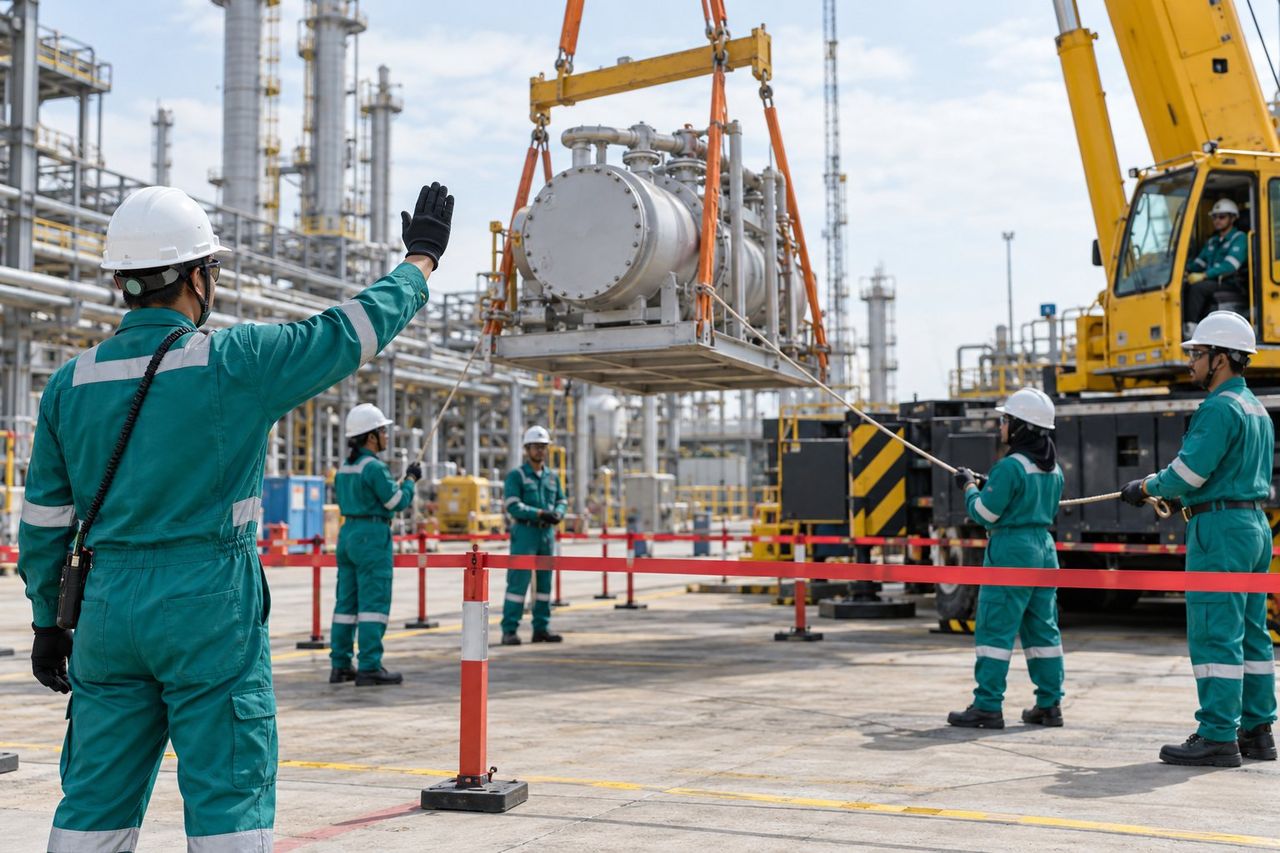 Health, Safety, Security & EnvironmentLifting & RiggingLift plans, slings and shackles, exclusion zones, signals, ground conditions and lifting emergencies.
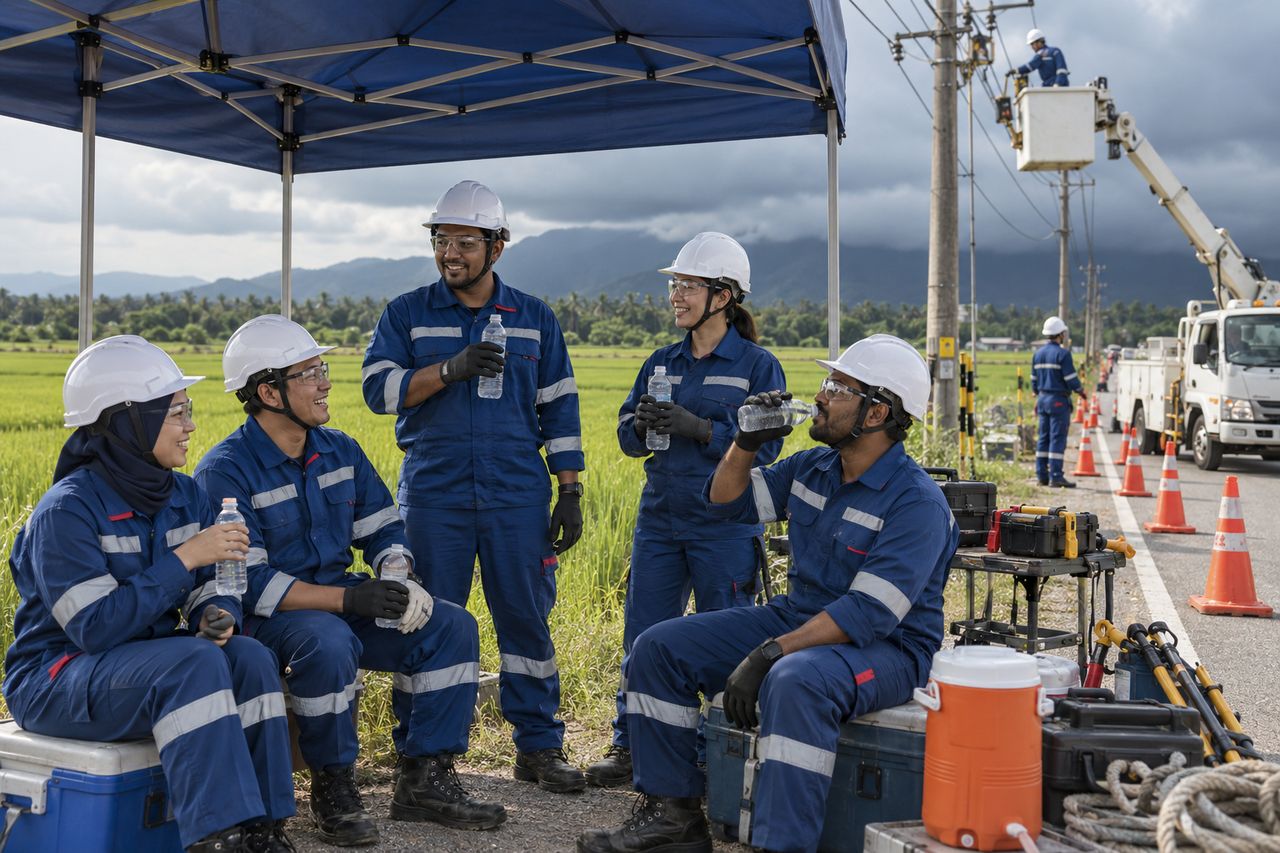 Health, Safety & EnvironmentHeat Stress & LightningA roadside line job on a hot afternoon with a storm coming: WBGT, work-rest planning, water, heat illness first aid and lightning shelter.
 Health, Safety, Security & EnvironmentSpeak Up & Stop WorkRole-play the moments when pressure pushes a shortcut, and practise the words that stop a job safely and respectfully.
Frequently asked questions
How long should a toolbox talk be?
How often should toolbox talks be held?
Who should give a toolbox talk?
Are toolbox talks a legal requirement in Malaysia?
What should a toolbox talk record include?
Sources
- Occupational Safety and Health (Amendment) Act 2022 [Act A1648], including section 26A
- DOSH: Guidelines for HIRARC 2008 (hierarchy of control, consultation and training)
- DOSH (JKKP) official website
This guide is general information for workplaces in Malaysia, checked against the sources above on 30 October 2026. It is not legal advice; laws and guidelines change, so confirm the current text before you act.