Safety induction training: a day-one checklist for new workers, contractors and visitors
Safety induction training is the briefing every new worker, contractor and visitor gets before they start: the site's main hazards, rules, emergency procedures, how to report problems and who to ask. In Malaysia it is the first step in the employer's duty under section 15(2)(c) of the OSH Act 1994 to provide information, instruction, training and supervision.

What safety induction training is, and why the law expects it
Safety induction training is the first safety briefing a person receives before they start work at a place of work. It tells them what can hurt them there, which rules they must follow, what to do in an emergency and how to raise a concern. A good induction is short, specific to the site and checked, so you know the person understood it.
The Occupational Safety and Health Act 1994 does not use the word "induction", but it sets the duties that an induction helps you meet:
- Section 15(2)(c): every employer must provide "such information, instruction, training and supervision as is necessary" to ensure, so far as is practicable, the safety and health at work of employees.
- Section 17: employers must run their undertaking so that people who are not their employees, such as visitors and the public, are not exposed to risks, and give them the prescribed information where required.
- Section 18A, added by the 2022 amendment and in force since 1 June 2024: a principal must take practicable measures for the safety and health of contractors, subcontractors and their employees working under the principal's direction, expressly including information, instruction, training and supervision.
- Section 24: employees must take reasonable care, co-operate with the employer, wear the protective equipment provided and follow safety instructions. They can only follow rules they have been told about.
Under section 19, breaching sections 15, 16, 17, 18, 18A or 18B carries a fine of up to RM500,000, imprisonment of up to two years, or both. Section 26 also bars employers from charging employees for anything provided under the Act. Our OSHA amendment 2022 guide explains the other new duties.
New worker induction checklist: what to cover on day one
Keep day one to what a person needs to work safely today. Detailed job training, competency courses and refreshers come later. This checklist works for most sites; adapt it to your own risk assessment.
| Topic | What to cover | How to check it landed |
|---|---|---|
| Who is who | Supervisor, safety officer or OSH coordinator, first aiders, emergency contacts | Can name their supervisor and how to reach help |
| Site layout | Work areas, restricted and no-go zones, walkways, vehicle routes, welfare facilities | Points them out on a walk-around |
| Main hazards | The top risks from your HIRARC for their area: height, moving vehicles, machinery, electricity, chemicals, heat | Names the hazards in their own work area and the control for each |
| Emergency | Alarm sounds, escape routes, muster point, fire extinguishers, first aid, how to report an injury | Walks the route to the muster point |
| PPE | What is required where, how to wear and check it, where to get replacements | Shows correct fit and pre-use check |
| Rules and permits | Site rules, prohibited items, smoking areas, when a permit to work is needed, energy isolation | Explains which tasks they must not start without a permit |
| Reporting | How to report hazards, near misses and incidents, and that reporting is expected | Describes how they would report a near miss |
| Stop work | Their right to stop or refuse unsafe work and how to do it | Says what they would do if asked to take a shortcut |
| Health and welfare | Fatigue, heat, drinking water, rest breaks, fitness for work, drugs and alcohol policy | Knows where water and rest areas are |
On stopping work, the Act itself backs the worker: section 26A gives an employee the right to remove themselves from imminent danger after informing the employer, if the employer fails to act, and protects them from undue consequences. Say this plainly in the induction; the Speak Up & Stop Work lesson lets new starters practise the words.
Site induction for contractors and visitors
Most serious incidents involve someone who did not know the site: a new contractor crew, a delivery driver, a maintenance technician on a one-day job. Because section 18A now makes the principal responsible for information, instruction, training and supervision of contractors working under its direction, a contractor's own company induction is not enough on its own.
Contractors
- Give a site-specific induction before the first shift, even if the contractor's employer has inducted them. Cover your hazards, your emergency arrangements, your permit system and your rules.
- Check their competence documents for the job (for example green card, competency certificates, licences) before they start, and record them.
- Agree who supervises them and how they report incidents to you.
- Repeat the induction when they move to a different area, the scope changes or they return after a long gap.
Visitors
Visitors who stay in offices or escorted routes usually need a short briefing: emergency alarm and muster point, PPE for the route, areas they must not enter, and who is escorting them. Many sites do this with a visitor card or a short video at the gate. Record name, date, host and that the briefing was given.
Different workers, different needs
Run the induction in a language the person understands. Foreign workers, young workers and people new to the industry often need more time, pictures and a demonstration rather than slides. Short narrated scenes and plain language help; a signature on an English form does not prove understanding.
Construction sites: CIDB green card and the SICW induction course
In construction there is an industry-wide layer on top of your own site induction. Under section 33(1) of the Construction Industry Development Board Act 1994 [Act 520], a person may not work as construction personnel unless registered with CIDB and holding a valid certificate of registration, widely known as the green card (Kad Hijau). Construction personnel include general, semi-skilled and skilled construction workers, site supervisors and construction project managers.
CIDB lists these requirements for registration:
- A valid identity document (MyKad, a passport with a valid work permit, or an IMM13P pass) and age 16 or above.
- A construction safety certificate: the Safety Induction for Construction Workers (SICW) course, its online version eSICW, the CIDB Holdings version, or another safety certificate or passport recognised by CIDB.
- Involvement in construction works.
For MyKad holders, registration is valid for a minimum of one year and a maximum of five, and renewal can be applied for 60 days before expiry. For work permit and IMM13P holders, validity follows the permit or pass. Registration is done in CIDB's CIMS system. CIDB also requires a Sijil Kompetensi Kemahiran Pembinaan (SKKP) for the site supervisor and construction project manager categories.
The green card shows that a worker has done the general industry induction. It does not tell them where your crane operates, where your edge protection is incomplete or where your muster point is. Treat it as a gate check, then give your site induction. The Construction Site lesson walks through green cards, scaffolds, edge protection, excavations and site traffic as a 3D site walk.
Checking understanding, not just attendance
An induction that is read aloud and signed is easy to audit and easy to forget. Research on safety training supports more active methods: a 2006 meta-analysis of 95 studies in the American Journal of Public Health found that more engaging methods, such as behavioural modelling and hands-on practice, were linked to bigger knowledge gains and larger reductions in accidents and injuries than lectures, pamphlets or videos. Practical ways to build that into an induction:
- Ask, don't tell. End each topic with a question: "Where is your muster point?", "What would you do if the gas alarm sounds?"
- Walk the site. Show the hazards, escape routes and first aid points in person, or in a realistic scene before they go out.
- Use a short assessment with a pass mark for the critical items (emergency, no-go areas, permits, stop work). Re-brief anyone who misses them.
- Buddy and supervise. Pair new starters with an experienced worker for the first days and have the supervisor confirm in writing that they are working safely.
- Follow up. A five-minute check at the end of week one catches what did not stick. A regular toolbox talk keeps it fresh.
Induction records: what to keep
When DOSH visits after an incident, or a client audits your contractor management, the first question is often "show me this person's induction". A useful record includes:
- Full name, IC or passport number, employer (for contractors) and job or trade.
- Date, location and the version of the induction content used.
- Topics covered, the language used and who delivered it.
- Result of the understanding check or assessment, and any re-briefing.
- Copies or numbers of competence documents checked, such as the green card and its expiry date.
- Signatures of the person and the inductor, or an equivalent electronic record with a timestamp.
Keep the records with your other training evidence and set a review date, so inductions are repeated when content changes. Section 31A of the Act also lets the Minister order a class of people to complete a specified OSH course from a registered training provider before doing certain work; where an order applies to your work, the employer must make sure the course is completed first, and your records should show it. Our training matrix guide shows how to track inductions, certificates and expiry dates in one place, with a free template.
Common induction mistakes
- One generic induction for every site. Company-wide content is a start; each site still needs its own hazards, routes and contacts.
- Too much on day one. A two-hour slide deck hides the five things that matter today. Put the rest in follow-up training.
- Contractors skipped because "their company inducted them". Under section 18A that does not cover your site's risks.
- No check of understanding, especially across language barriers.
- Out-of-date content that still shows an old muster point or a closed exit.
- Records that cannot be found or do not show what was covered.
Using interactive lessons for induction
Interactive lessons are useful for the parts of induction that are the same for everyone: core hazards, emergency response, reporting and stop-work. They give each new starter, shift and contractor crew the same message before the site walk with a supervisor.
In WorkQuest2U, learners walk a 3D work scene in the browser with a guide, stop for short briefings, spot the hazards and finish with an assessment against a pass mark. Lessons such as Fire Safety, Line of Fire & Dropped Objects and Prohibited Items & Activities fit an induction programme. In the company workspace, managers assign the programme by department with a due date, track progress, and keep certificates and timestamped results. The sample workspace shows how it looks with synthetic data. Interactive lessons support your induction; they do not replace the site-specific walk-around, supervision, the CIDB safety induction course or any course the law requires from a DOSH-registered training provider.
Practise it in WorkQuest2U
Short 3D lessons where staff walk the scene, spot the issues and make the calls. Free to try, with certificates and progress records for companies.
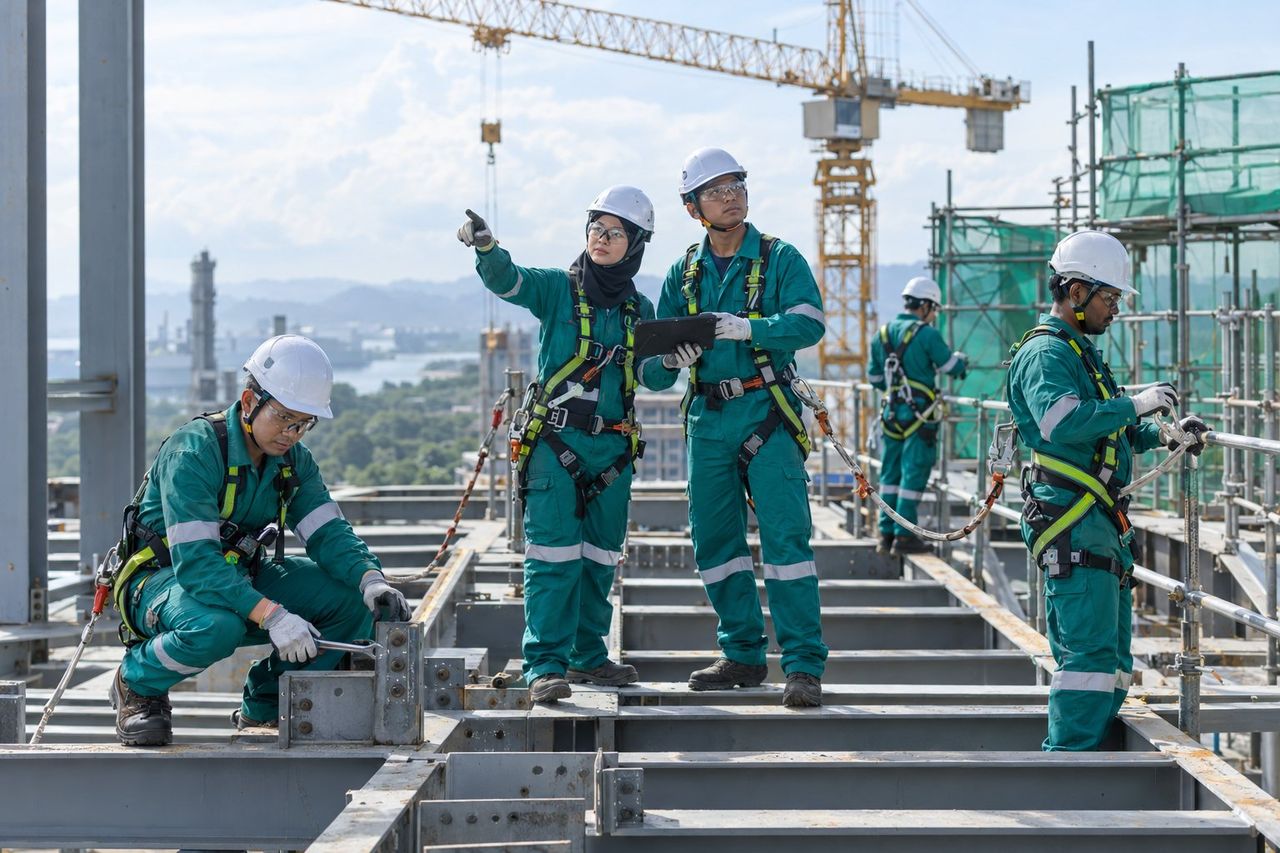 Health, Safety, Security & EnvironmentConstruction SiteA live building site: green cards, scaffolds and edge protection, excavations, cranes, reversing trucks and site power.
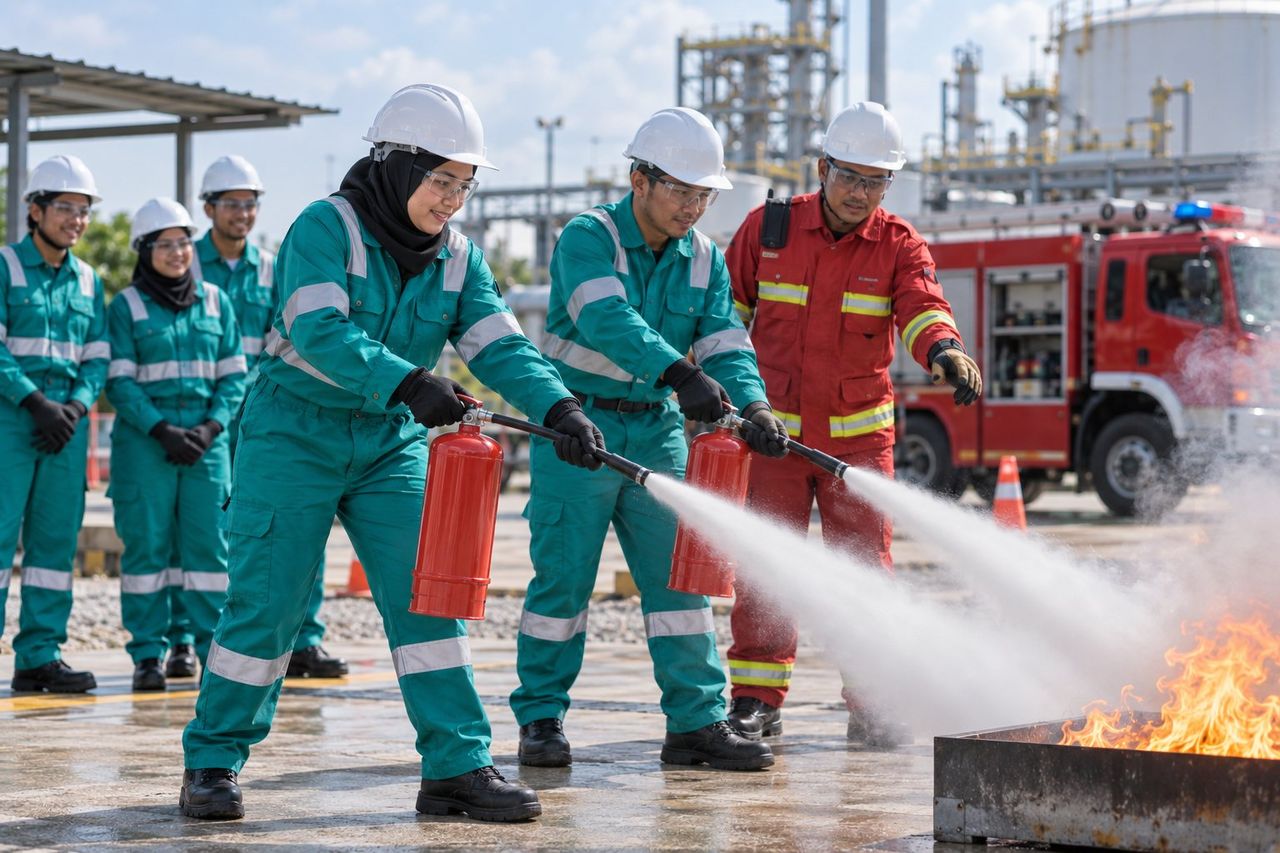 Health, Safety, Security & EnvironmentFire SafetyTrain on a fire ground: fire triangle, classes and extinguishers, PASS, smoke, gas fires and the muster.
 Health, Safety, Security & EnvironmentSpeak Up & Stop WorkRole-play the moments when pressure pushes a shortcut, and practise the words that stop a job safely and respectfully.
 Health, Safety, Security & EnvironmentLine of Fire & Dropped ObjectsMoving loads, stored energy, pinch points, dropped objects and vehicles: learn to ask "where will it go if it fails?" and step out of the path.
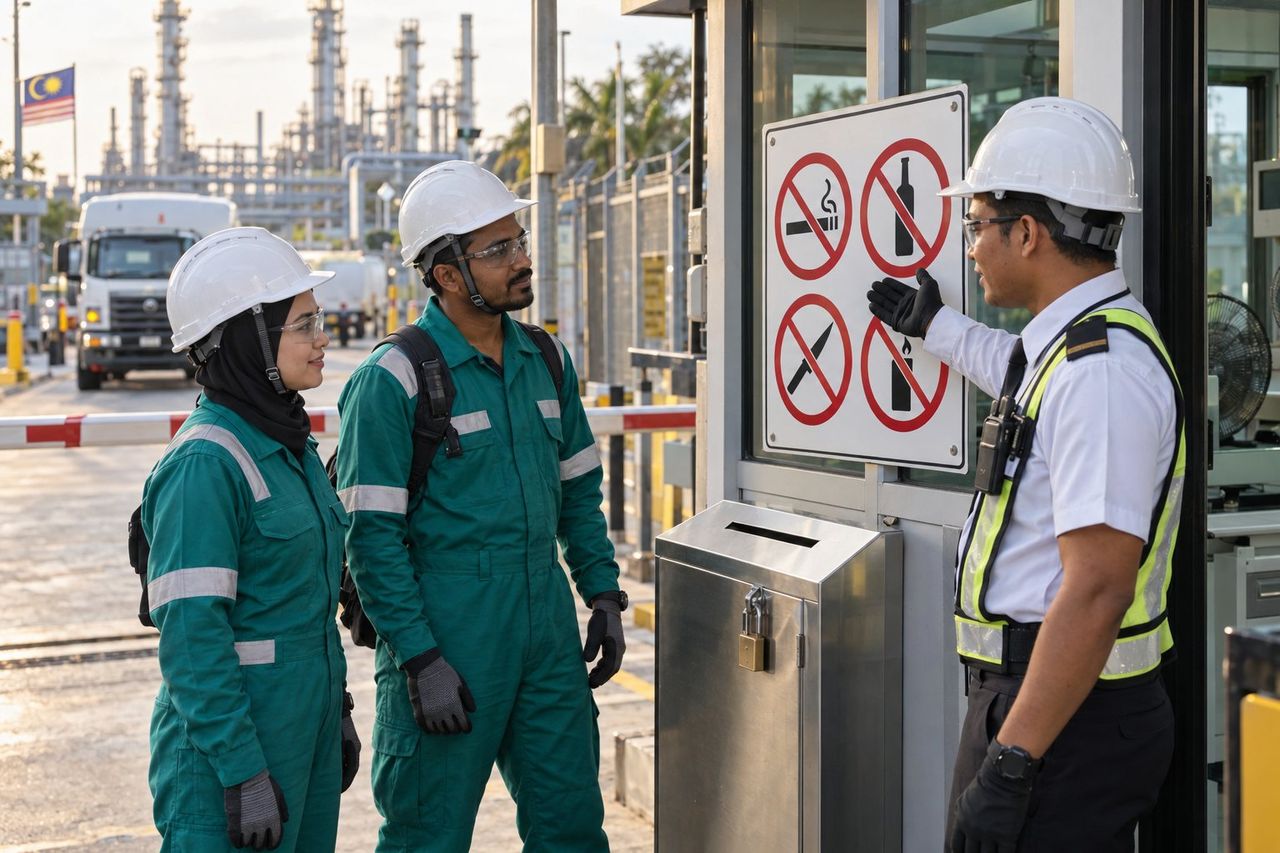 Health, Safety, Security & EnvironmentProhibited Items & ActivitiesWhat never comes through the gate, and why: drugs and alcohol, smoking and ignition sources, weapons, knives, risky behaviour, plus searches and the amnesty box.
 Health, Safety, Security & EnvironmentHSSE Laws & RegulationsMalaysia's HSSE law on a DOSH inspection day: OSHA 1994 and its 2022 amendments, duties, risk assessment, committees, chemicals, noise, accident notification and why company standards go further.
Frequently asked questions
Is safety induction training mandatory in Malaysia?
What should a safety induction include?
What is the CIDB green card?
How long should a safety induction take?
Do visitors need a safety induction?
Do contractors need our site induction if their employer already inducted them?
Sources
- Occupational Safety and Health Act 1994 [Act 514], reprint as at 1 June 2024 (DOSH): sections 15, 17, 18A, 19, 24, 26, 26A, 31A
- Occupational Safety and Health (Amendment) Act 2022 [Act A1648]
- CIDB: Construction personnel registration (requirements, SICW, validity, SKKP)
- Burke et al. (2006), Relative effectiveness of worker safety and health training methods, American Journal of Public Health 96(2)
This guide is general information for workplaces in Malaysia, checked against the sources above on 30 October 2026. It is not legal advice; laws and guidelines change, so confirm the current text before you act.