First aid at work in Malaysia: first aiders, first aid box contents and employer duties
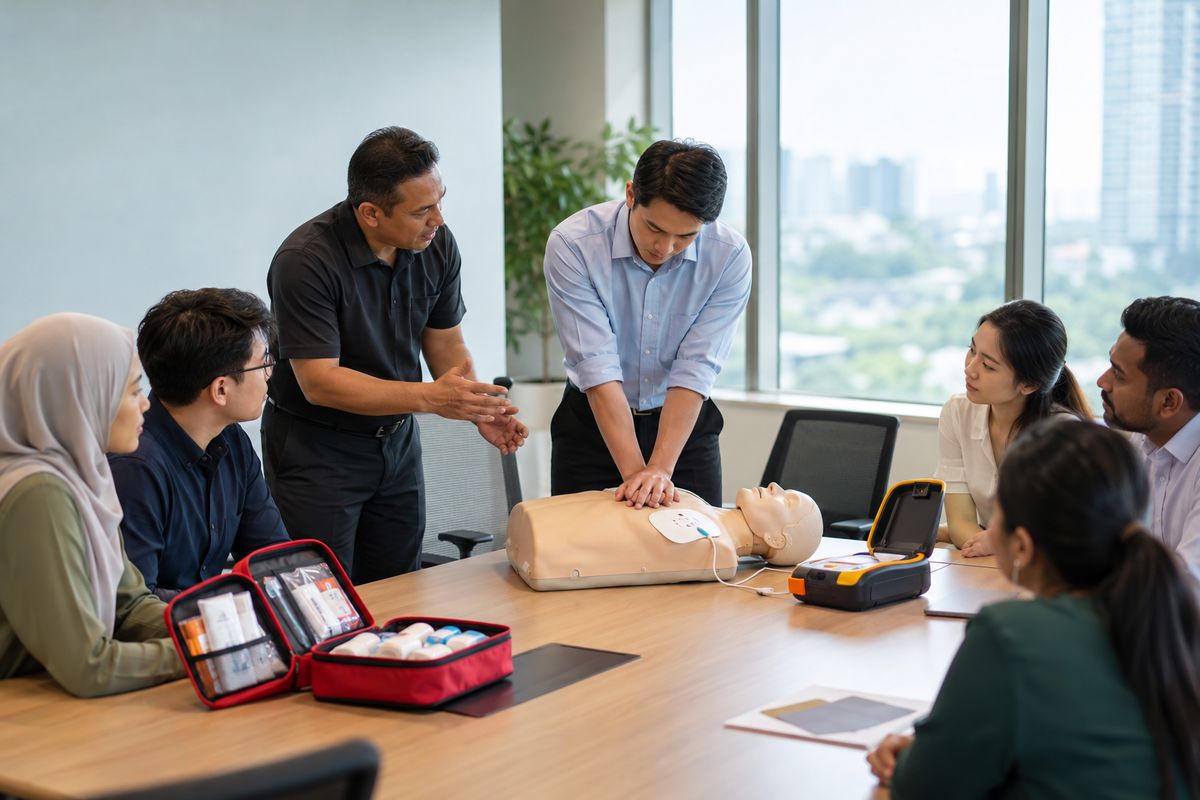
Under the OSH Act 1994, employers must provide first aid as part of their duty for the safety, health and welfare of employees. The DOSH Guidelines on First-Aid in the Workplace (2nd edition, 2004) say how many trained first aiders to have, what goes in the first aid box, when a first aid room is needed, and what records to keep.
The legal basis for first aid at work
Section 15(1) of the Occupational Safety and Health Act 1994 requires every employer to ensure, so far as is practicable, the safety, health and welfare at work of all employees. The DOSH guideline treats first aid facilities and first aiders as part of that welfare duty. Since the amendments came into force on 1 June 2024, section 15(2)(f) also requires the development and implementation of procedures for dealing with emergencies, and a medical emergency is one of them.
For decades, factory first aid was also governed by section 25 of the Factories and Machinery Act 1967 and regulation 38 of the Factories and Machinery (Safety, Health and Welfare) Regulations 1970: a first aid box readily accessible at all times, a responsible person proficient in first aid where more than 20 people were employed, and a first aid room above 150. The Factories and Machinery (Repeal) Act 2022 (Act 835) took effect on 1 June 2024 together with the OSH amendments, so those rules are no longer a separate source. The general OSH Act duty now covers every workplace, not just factories, and the DOSH guideline remains the practical benchmark.
The guideline is Guidelines on First-Aid in the Workplace, 2nd edition, DOSH 2004 (JKKP GP(I) 06/2004). It is guidance, not regulation, but it is what DOSH officers and auditors measure you against.
How many first aiders do you need?
The guideline asks you to consider the type of industry, the number of workers, the number of shifts, and how far the site is from the nearest clinic or hospital. Its general guide is:
| Workplace | Number of workers | First aiders |
|---|---|---|
| Low-risk hazards (for example an office) | Fewer than 20 | 1 |
| 21 to 150 | 2 | |
| More than 150 | 2 for every 150 workers or part thereof | |
| High-risk hazards (for example chemical plants, shipyards, construction sites) | Fewer than 20 | 1 per shift |
| 20 or more | 1 for every 20 workers or part thereof | |
| More than 400 workers | Any | 2 for every 150 workers or part thereof, plus a registered nurse or medical assistant employed on site |
| Logging | Any | 1 for every tree-felling gang |
Two rules catch people out. Shift work: each shift needs enough first aiders by the table. Shared sites: where several employers work together, such as a construction site, the principal employer should provide first aid cover, or the employers can agree in writing that one of them will, with each keeping a copy of the agreement.
Also plan for leave, travel and people working away from the main site. Display a notice of first aiders' names and locations in a prominent place, and give them a badge or armband so they are easy to find.
Choosing and training first aiders
The guideline defines a first aider as someone who has passed a first aid course and holds a certificate of proficiency from a recognised institution. Its Appendix 1 lists institutions under the Ministry of Health, NIOSH, the Malaysian Society for Traumatology and Emergency Medicine, the Malaysian Red Crescent Society, St John Ambulance Malaysia, and organisations whose trainers were trained by these and approved by the Director General of DOSH.
Pick people who are physically fit, can leave their work immediately to respond, and are spread across areas and shifts. The course content in Appendix 2 has two parts: basic life support (the chain of survival, CPR for one and two rescuers, choking, and the recovery position) and first aid and basic trauma (casualty assessment, spinal injury, shock, fractures and wounds), plus optional modules such as burns, heat disorders, eye injuries and chemical contact chosen for your industry.
First aiders should attend a recognised refresher course every three years. Keep a record of when each first aider was trained and refreshed; our training records guide shows what auditors ask for. Where chemicals hazardous to health are used, first aiders should get extra training in decontamination, and the current safety data sheet should be kept close to where each chemical is used.
First aid box contents (DOSH list)
Appendix 4 of the DOSH guideline recommends these contents for a first aid box:
- 5 triangular bandages (130 cm × 90 cm × 90 cm) and safety pins
- Sterile eye pads
- Gauze pads: non-sterile 4×4 inch, sterile 4×4 inch and sterile 10×10 inch
- Roller bandages: 4 each of 7.5 cm, 3 cm and 2.5 cm, plus an elastic bandage
- Sterile multi-trauma dressing, burn sheet or dressing, and sterile adhesive dressings (plasters)
- Cold pack compress gel
- Disposable gloves, stainless steel bandage scissors and adhesive tape
- Alcohol prep pads, antiseptic (Cetavlon) and cotton buds
- A barrier device for CPR (pocket mask or face shield)
- A thermometer, a first aid manual, a waterproof waste bag, and an inventory checklist of the contents
The guideline adds that the box should be sturdy, portable and clearly marked; placed in a clearly identifiable, well-lit, accessible spot, with enough boxes for a large site; and contain no oral medication other than what first aid treatment needs. Check it frequently, replace used items as soon as possible, and watch use-by dates. The first aider looks after the box, but the employer keeps the responsibility. Appendix 6 gives a yes/no checklist you can use for monthly checks.
First aid rooms and special requirements
Provide a first aid room where there are more than 150 employees. The guideline asks for a room big enough for a couch with space to move, emergency lighting, easy-to-clean floors and walls, privacy, and a clear sign. Site it near a shower for decontamination, near lifts and corridors wide enough for a stretcher, and with easy access to the car park for an ambulance. Appendix 8 lists the facilities, including a sink, a treatment couch, portable stretchers, splints, spinal immobilisation equipment (cervical collar and spinal board) and a torch.
Where there is a risk of mass casualties, plan a safe place for evacuation and keep extra stretchers, wheelchairs, blankets and bandages. Give first aiders protective equipment so they do not become casualties themselves, follow universal precautions with blood and body fluids, and consider hepatitis B immunisation, as the guideline recommends.
CPR and AED basics every employee should know
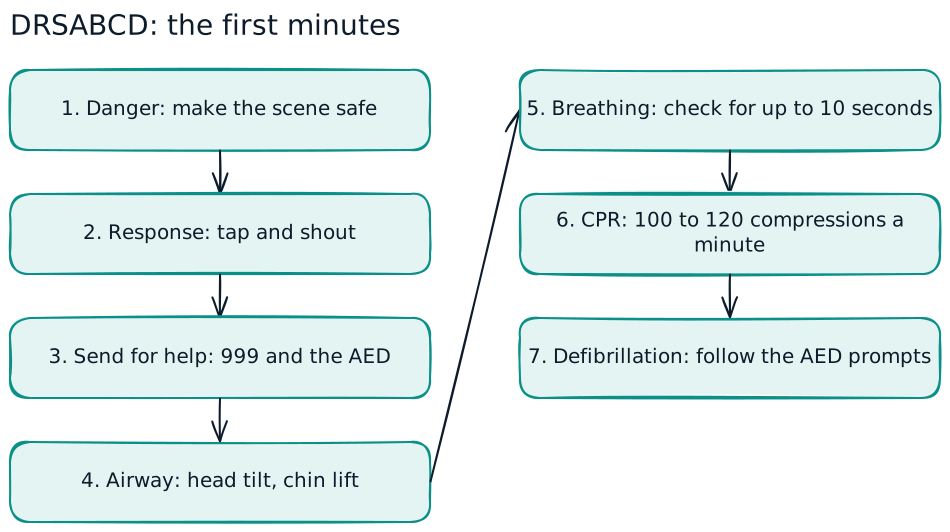
In a cardiac arrest, the minutes before the ambulance arrives decide the outcome. Every employee, not only first aiders, should know the sequence the First Aid & CPR lesson practises, often taught as DRSABCD:
- Danger: make sure the scene is safe for you, bystanders and the casualty (isolate electricity first in an electric shock).
- Response: tap the shoulders and shout.
- Send for help: call 999, call your site emergency number and ask someone to bring the AED.
- Airway: open it with a head tilt and chin lift.
- Breathing: look, listen and feel for up to 10 seconds. If the person is not breathing normally, start CPR.
- CPR: push hard and fast in the centre of the chest, about 100 to 120 compressions a minute, letting the chest come back up between each. Give rescue breaths with a barrier device only if trained and willing.
- Defibrillation: switch on the AED and follow its voice prompts. Keep compressions going except when the AED says not to touch the person.
If your site has an AED, tell everyone where it is, check its battery and pads regularly, and include it in first aid drills. Practising in a 3D scene helps people remember the order under pressure, but it is not a substitute for a hands-on course with a manikin. Always act within your training.
Records, reviews and common gaps
The guideline asks for a record of each casualty and the treatment given (Appendix 3), kept by the employer for five years. It should cover the immediate treatment, what happened and the work process involved, the injury or illness, any referral (ambulance, clinic or hospital) and the follow-up. These records are also an early warning: repeated cuts or eye injuries in one area belong in your HIRARC review.
First aid records do not replace legal reporting. Serious accidents, dangerous occurrences, occupational poisoning and diseases must be notified to DOSH; see our guide to accident reporting to DOSH. Review your whole first aid arrangement every year using the guideline's Appendix 5 checklist.
Common gaps to check for:
- First aiders on the day shift only, or all on leave in the same week.
- Certificates expired because nobody tracked the three-year refresher.
- A locked box with the key holder off site, or a box full of painkillers and empty of dressings.
- No notice showing who the first aiders are.
- Staff who do not know where the AED is.
Free training matrix template (printable, A4 landscape)
List your first aiders by shift with course dates and three-yearly refresher due dates. Print it or save as PDF; no sign-up.
Practise it in WorkQuest2U
Short 3D lessons where staff walk the scene, spot the issues and make the calls. Free to try, with certificates and progress records for companies.
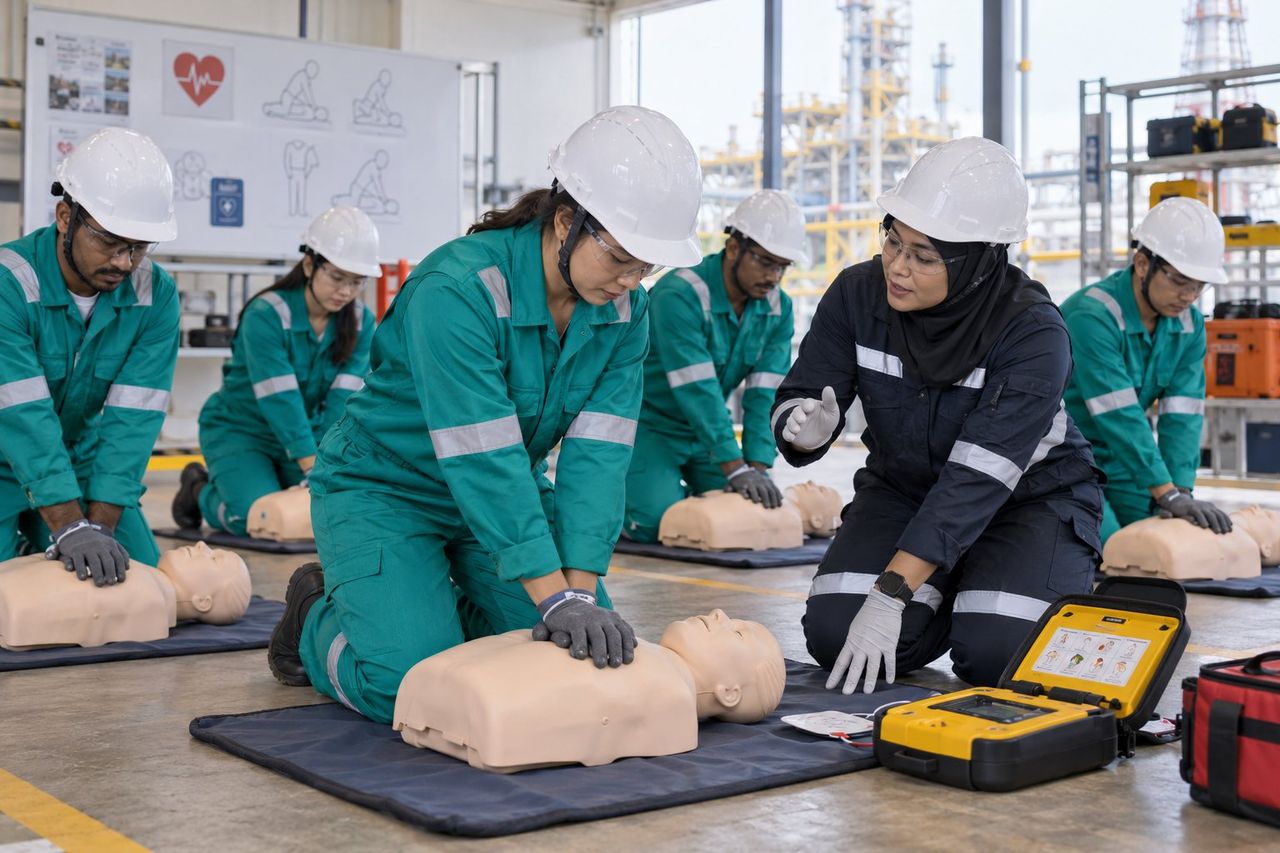 Health, Safety, Security & EnvironmentFirst Aid & CPRPractise the first minutes that save a life: DRSABCD, CPR and the AED, bleeding, burns, heat stroke and eye splashes, always within your training.
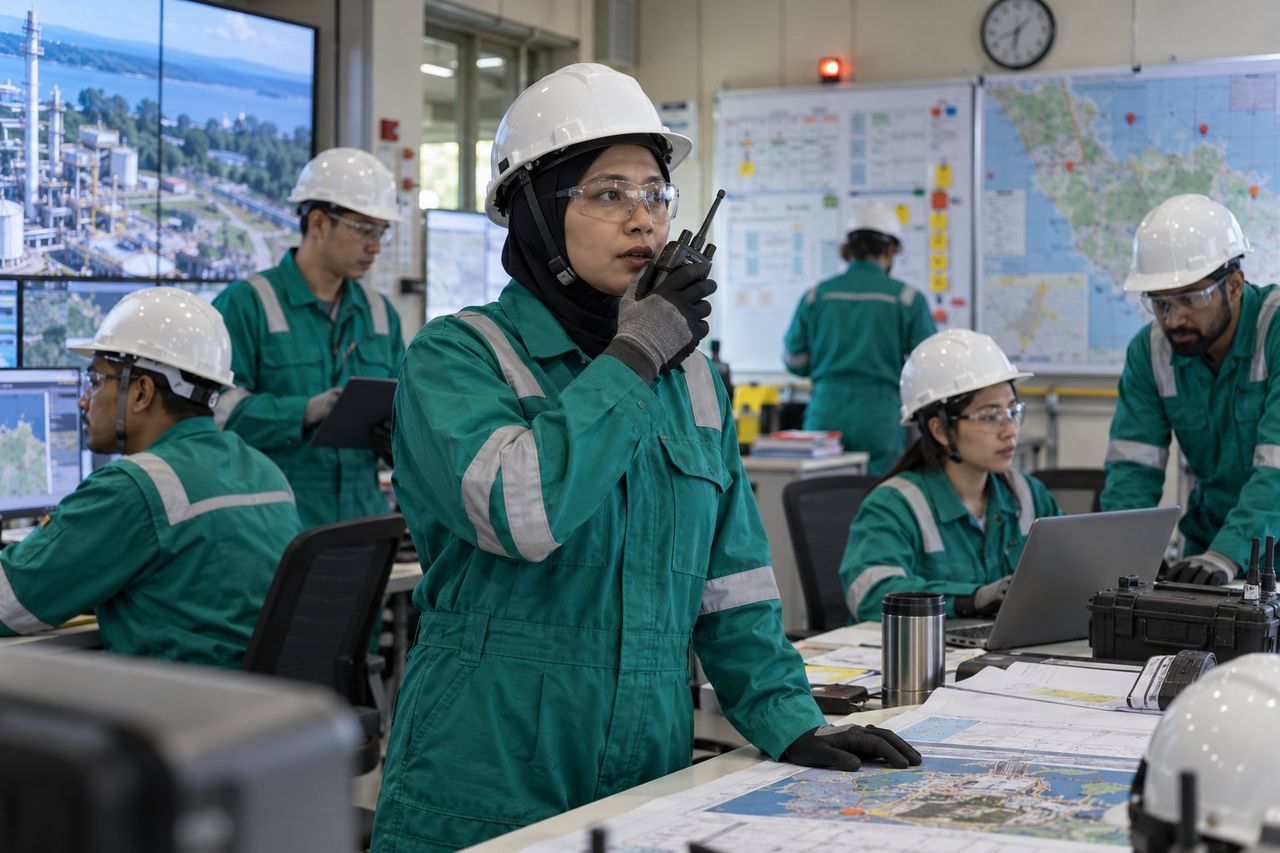 Health, Safety, Security & EnvironmentEmergency Response CentreWhen things go wrong: raising the alarm, muster and headcount, incident command, triage, mutual aid and media.
 Health, Safety, Security & EnvironmentElectrical SafetySubstation, MCC room, workshop and temporary power: shock, arc flash, LOTO and prove-dead, RCDs and electric shock response.
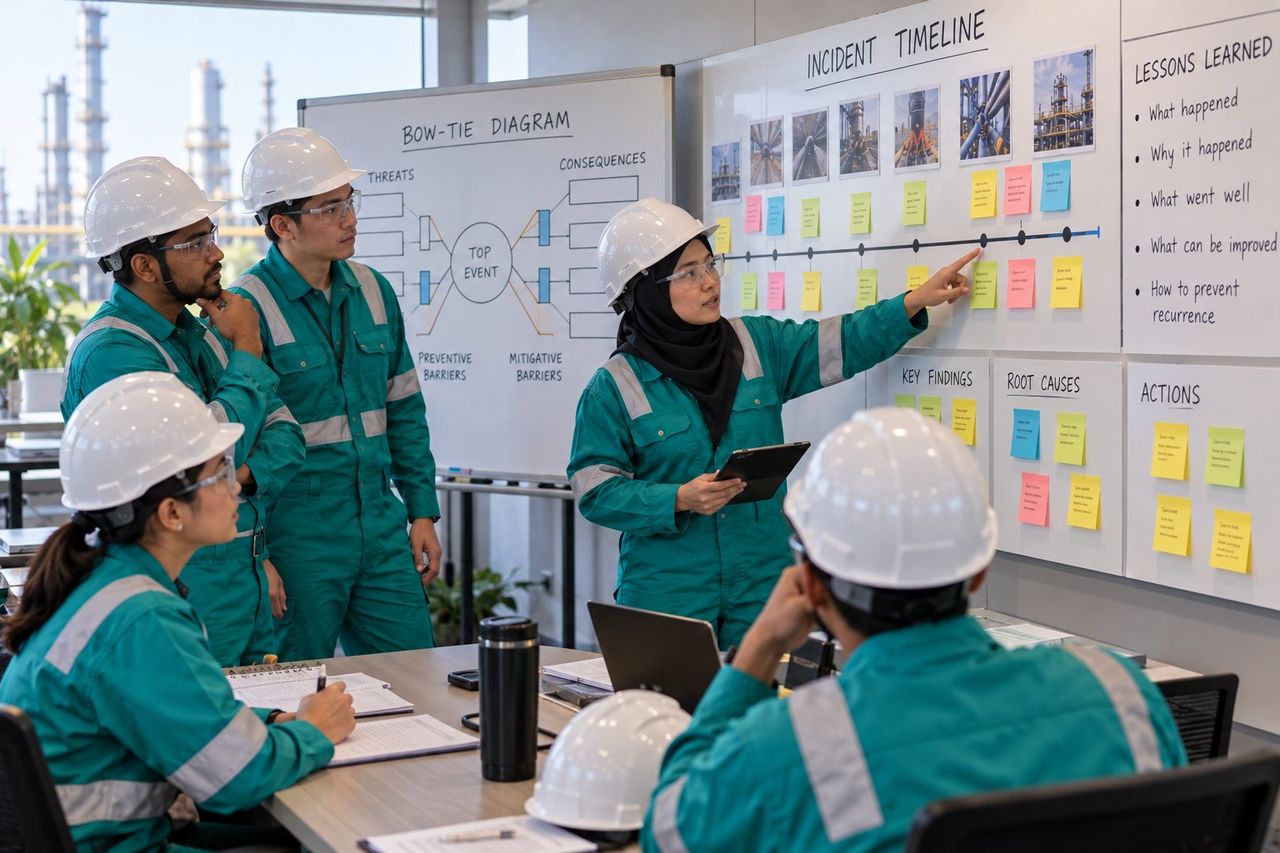 Health, Safety, Security & EnvironmentIncident Investigation & Root CauseMake the scene safe, gather the 4Ps of evidence, interview without blame, build the timeline and dig past the immediate cause to the root.
Frequently asked questions
Is first aid mandatory at work in Malaysia?
How many first aiders are required per employee?
What should be in a first aid box at work?
How long is a first aid certificate valid?
When does a workplace need a first aid room?
Does a WorkQuest2U lesson make someone a certified first aider?
Sources
- DOSH: Guidelines on First-Aid in the Workplace, 2nd edition 2004, JKKP GP(I) 06/2004 (copy hosted by Universiti Malaya)
- Occupational Safety and Health Act 1994 [Act 514], section 15 (USM copy)
- Occupational Safety and Health (Amendment) Act 2022 [Act A1648], section 15(2)(f)
- DOSH: Akta Kilang dan Jentera (Pemansuhan) 2022 [Akta 835]
- P.U.(B) 128/2024: commencement on 1 June 2024 (DOSH)
This guide is general information for workplaces in Malaysia, checked against the sources above on 30 October 2026. It is not legal advice; laws and guidelines change, so confirm the current text before you act.