ESG training for employees: what each role needs to know and how to roll it out
Effective ESG training for employees explains what environmental, social and governance issues mean for your business in plain terms, then gives each role the specific habits it needs: accurate data for reporting, honest claims, supplier checks and safe, fair treatment of people.
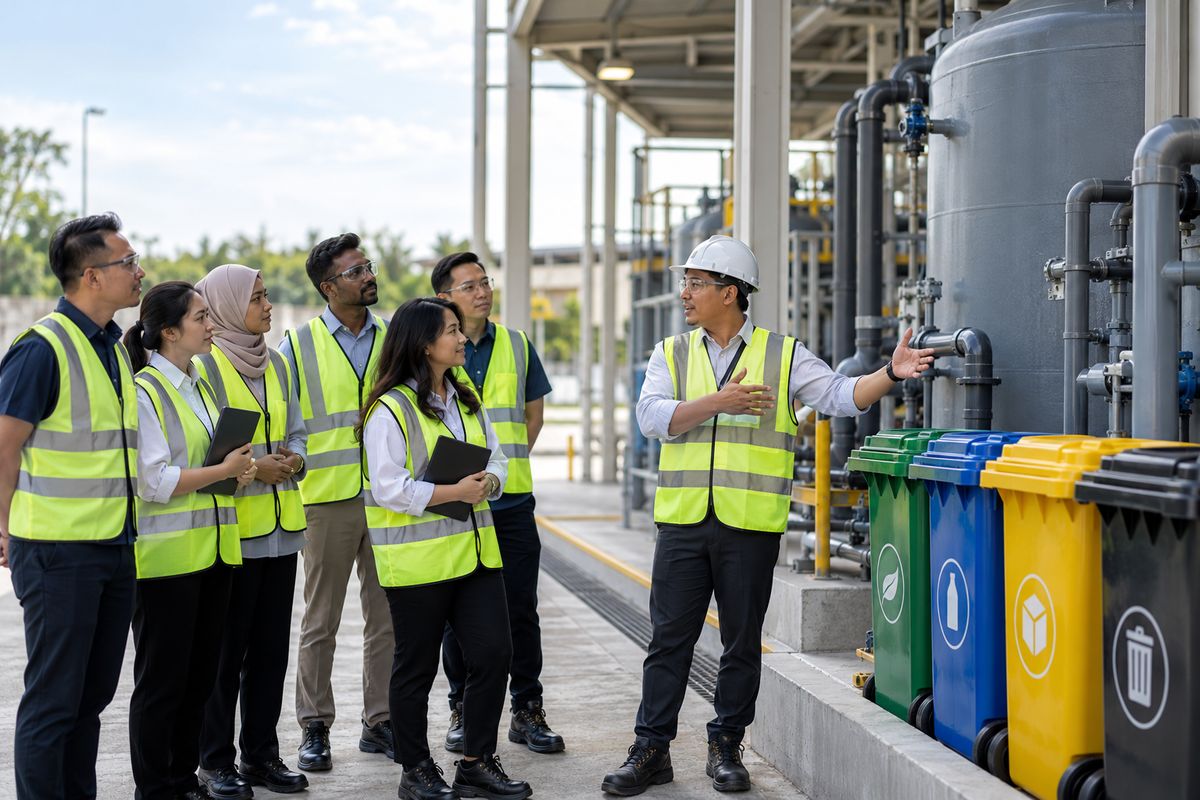
What ESG means in plain terms
ESG stands for environmental, social and governance. It is a way of looking at how a company affects the world around it and how those effects come back to the business as risks, costs or opportunities.
- Environmental: energy use and greenhouse gas emissions, water, waste, pollution, land and biodiversity.
- Social: health and safety, fair pay and working hours, labour rights in the supply chain, diversity and inclusion, communities around your sites, customers' data and wellbeing.
- Governance: board oversight, ethics and anti-corruption, risk management, honest reporting and accountability.
For most employees, ESG is not a new job. It is doing existing jobs with a few extra questions in mind: how much did this use, who could this affect, and can we prove what we say?
Start with our ESG Basics lesson, where staff explore materiality and their own role in a short 3D scene.
Why companies in Malaysia are training staff on ESG now
Three pressures have arrived together:
- Reporting rules. The National Sustainability Reporting Framework (NSRF) adopts the ISSB Standards (IFRS S1 and S2). Large Main Market companies started in 2025, other Main Market companies in 2026, and ACE Market companies and non-listed companies with revenue of RM2 billion and above follow from 2027. Reported figures are expected to move towards independent assurance.
- Customers and lenders. Companies that report need emissions and ESG data from their suppliers, and banks are asking climate questions in financing reviews. Even companies outside the NSRF get the questionnaires.
- Proposed wider disclosure. In 2026 the Companies Commission of Malaysia consulted on Companies Act amendments that would bring sustainability disclosure to non-listed companies with revenue above RM15 million, phased from 2028. As of October 2026 that is a proposal, not law.
The common thread is evidence. A sustainability report is only as good as the meter readings, invoices, headcount data and supplier answers behind it, and those come from employees who do not see themselves as "ESG people".
What each role needs to know
| Role | What they need | Suggested lessons |
|---|---|---|
| All employees | What ESG means here, the company's material issues, everyday actions, how to raise a concern | ESG Basics, Everyday ESG Action Planning |
| Facilities, operations, site teams | Recording energy, fuel, water and waste accurately, units and boundaries, keeping the evidence | Climate & GHG Emissions |
| Procurement | Supplier questionnaires, labour and human rights risks, checking supplier claims | Supplier ESG, Human Rights & Supply Chain |
| Marketing, communications, sales | Making specific, evidenced green claims and avoiding vague ones | Greenwashing & Honest Claims |
| Finance and the reporting team | Data controls, consistency with the financial statements, preparing for assurance | Sustainability Reporting |
| Managers and directors | Oversight, targets and accountability, how ESG risks reach the risk register | ESG Governance |
| HR | Safety, fair treatment, diversity and inclusion data, workforce disclosures | Diversity, Equity & Inclusion and the HR compliance lessons |
Keep the baseline short and the same for everyone. Put the depth where the data and the claims are made.
Greenwashing: the risk most staff underestimate
Greenwashing is making environmental claims that are vague, exaggerated or not backed by evidence. It often happens without bad intent: a salesperson calls a product "eco-friendly" because a supplier said so, or a social media post says "carbon neutral" when the offsets have not been checked.
Teach a simple test before any claim goes out:
- Is it specific? "30% less packaging than our 2024 design" beats "sustainable packaging".
- Is there evidence we can show? Data, a method and a date, kept on file.
- Does it cover the whole product or just one part? Say which.
- Has the right person reviewed it? Usually the sustainability lead and legal or compliance.
Listed companies also face a governance angle: the ACSR has said misleading sustainability disclosures will face enforcement. The Greenwashing & Honest Claims lesson lets staff test real-looking claims and rewrite them.
Data collection for reporting
Most errors in sustainability data are mundane: the wrong unit (kWh against MWh), a site missing from the total, a month counted twice, an estimate that nobody marked as an estimate. Training that prevents these is worth more than any amount of ESG theory.
Teach the people who handle data to record five things with every figure:
- The source (meter, bill, invoice, system report).
- The period and the boundary (which sites or activities).
- The unit, and the conversion or emission factor used.
- Whether it is actual or estimated, and how any estimate was made.
- Who prepared and checked it.
This is exactly what an assurer will ask for. Our free Everyday ESG Action Workbook walks through baseline, boundary, source and data quality for one workplace impact.
Supply chain: sending and answering ESG requests
Under IFRS S2, a reporting company's Scope 3 emissions include the emissions of its suppliers. Malaysia's transitional reliefs defer Scope 3 for the first years, but companies are building supplier data now. That means procurement teams on both sides need training.
- If you send questionnaires: ask for what you will actually use, explain why, accept a common format where possible, and check answers that look too good.
- If you answer them: keep one master set of answers and evidence, name an owner, and never guess a figure. Capital Markets Malaysia's voluntary Simplified ESG Disclosure Guide (SEDG) for SMEs gives a common set of disclosures many buyers recognise.
- Social risks: forced labour indicators such as recruitment fees, retained passports and excessive overtime are as important as carbon. Procurement staff should know the signs and how to escalate.
How to roll out ESG training
- Start from your material issues. Use the topics in your sustainability statement or materiality assessment, so training matches what you report.
- Baseline for everyone, ideally in onboarding: 20 to 30 minutes on what ESG means here and what to do.
- Role tracks for the teams in the table above, timed before data collection or reporting season.
- Practice, not slides. Staff remember a decision they made: rejecting a vague claim, spotting a missing site in a dataset, flagging a supplier concern. WorkQuest2U lessons put staff in a 3D scene where they make those calls and get feedback.
- Refresh yearly and when the rules change, for example when the NSRF reliefs end or assurance requirements are confirmed.
Link ESG training to what staff already do. Safety, anti-corruption, data protection and fair treatment at work are all part of the "S" and "G", so point to those courses rather than repeating them. A short ESG module that says "this is why the safety induction and the anti-bribery course matter to our sustainability report" connects the dots without adding hours.
Give sites and departments a named ESG contact, usually the person who already owns the data or the claims. Train that person first and more deeply, so colleagues have someone to ask before a figure is submitted or a claim is published.
Measuring whether it worked
Completion rates show who finished a course. Track these alongside them:
- Data quality: number of corrections needed in reporting data, late submissions from sites, unexplained estimates.
- Claims review: proportion of external green claims that went through review before release.
- Supplier responses: response rate and completeness of supplier questionnaires.
- Concerns raised: ESG or human rights concerns reported internally, a sign people know what to look for.
- Knowledge: quiz scores per department, repeated each year.
Keep the training records with your sustainability evidence. Certificates and per-person records make it easy to show a reviewer or assurer that the people preparing the data were trained.
Free Everyday ESG Action Workbook
A printable worksheet to pick one workplace impact and plan an action with a baseline, owner, indicator and evidence. Practise with fictional information.
Practise it in WorkQuest2U
Short 3D lessons where staff walk the scene, spot the issues and make the calls. Free to try, with certificates and progress records for companies.
 ESG & SustainabilityESG BasicsA sustainability gallery in a KL tower: what E, S and G really cover, materiality, why the world is watching, NZCE 2050 and your part in it.
 ESG & SustainabilityEveryday ESG Action PlanningBuild an evidence-based workplace action plan with a baseline, useful measures, accountable owners and honest progress reporting.
 ESG & SustainabilityClimate & GHG EmissionsA carbon management centre: greenhouse gases, Scope 1, 2 and 3, intensity versus absolute, measuring and verifying, and the levers that cut emissions.
 ESG & SustainabilityGreenwashing & Honest ClaimsA communications studio, packaging wall and claims review room: make environmental claims specific, evidenced and approved.
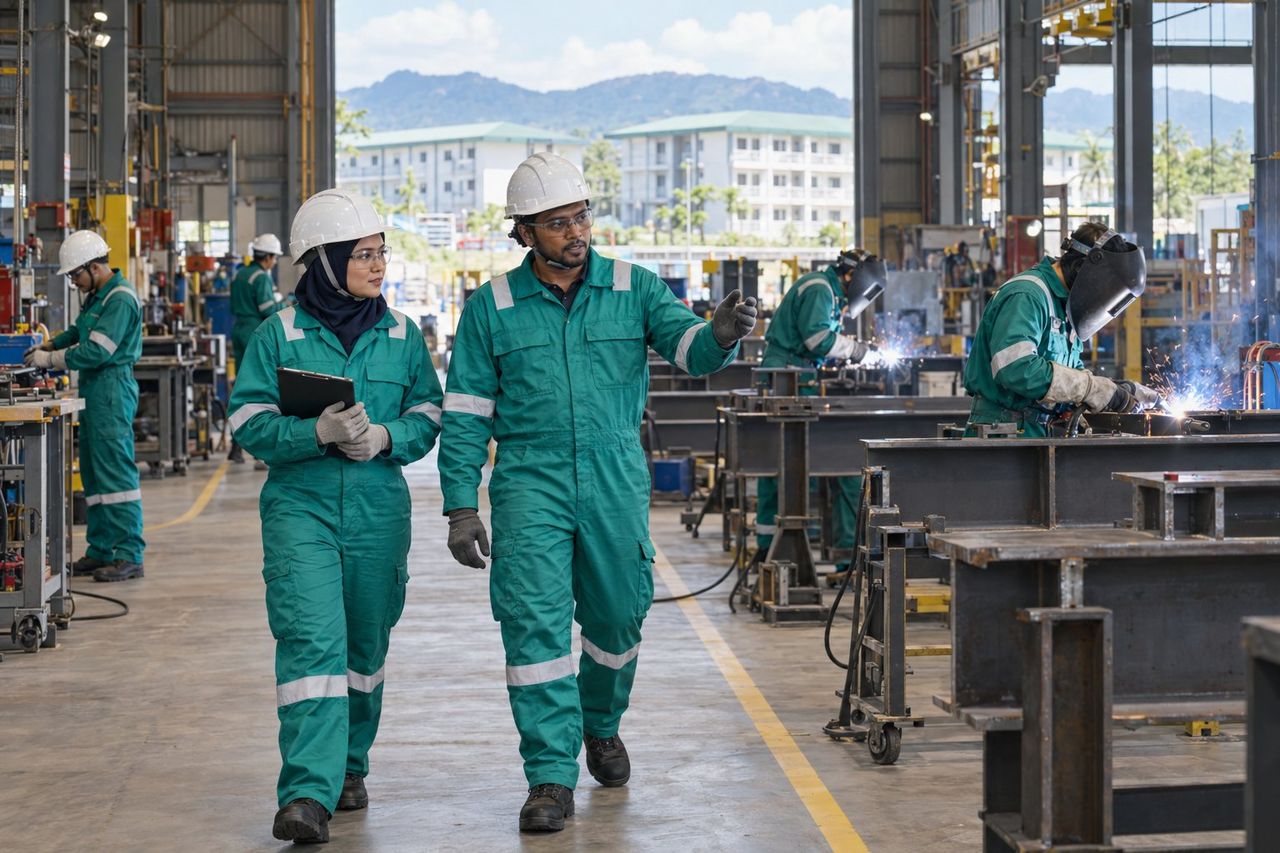 ESG & SustainabilitySupplier ESGA supplier's fabrication yard: screen, audit and develop suppliers on labour, human rights, environment and Scope 3.
 ESG & SustainabilitySustainability ReportingThe sustainability data room: NSRF and IFRS S1/S2, Bursa rules, materiality, boundaries, data quality, restatements and assurance.
Frequently asked questions
What should ESG training for employees cover?
Is ESG training mandatory in Malaysia?
How long does ESG awareness training take?
What is greenwashing?
Do small suppliers need ESG training?
Sources
- Securities Commission Malaysia: National Sustainability Reporting Framework (NSRF)
- SC media release, 24 September 2024: National Sustainability Reporting Framework to enhance sustainability disclosures
- The Star: ACSR sets out approach for non-compliance with sustainability reporting requirements (December 2025)
- The Star: SSM eyes early 2027 for Companies Act amendments on sustainability reporting (July 2026)
- Capital Markets Malaysia: Simplified ESG Disclosure Guide (SEDG) for SMEs
This guide is general information for workplaces in Malaysia, checked against the sources above on 30 October 2026. It is not legal advice; laws and guidelines change, so confirm the current text before you act.