Confined space entry in Malaysia: the ICOP 2010, AGT, AESP and rescue
In Malaysia, confined space entry follows the DOSH Industry Code of Practice for Safe Working in a Confined Space 2010: assess the risk, isolate the space, have an authorised gas tester test oxygen, then flammables, then toxics from outside, issue a written entry permit, keep a trained standby person at the entrance and have a rehearsed rescue plan before anyone goes in.
What counts as a confined space
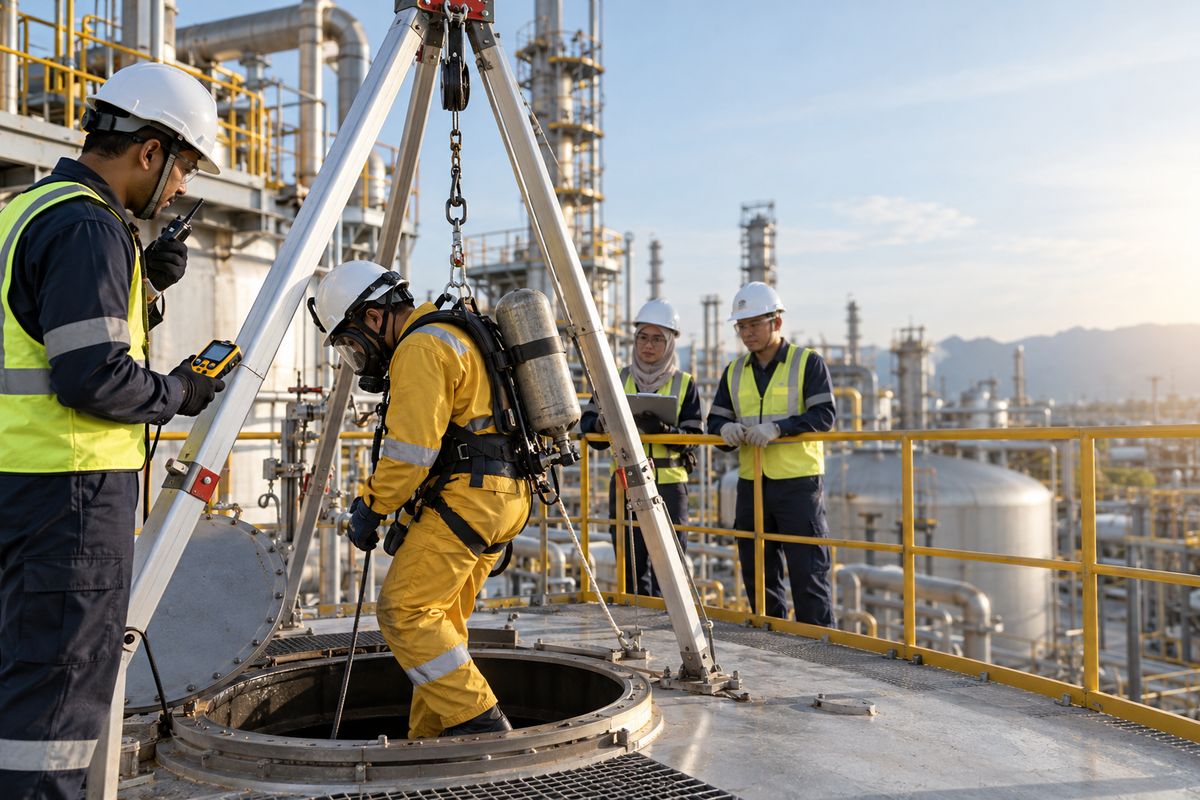
The ICOP defines a confined space as an enclosed or partially enclosed space that is at atmospheric pressure while people are in it, is not designed primarily as a place of work, could have restricted means of entry and exit, and is liable at any time to have harmful levels of contaminants, too little or too much oxygen, or a risk of engulfment.
The code gives examples: storage tanks, tankers, boilers and silos entered through a manhole; open-topped spaces such as pits and degreasers; pipes, sewers, tunnels, shafts and ducts; and shipboard spaces such as cargo, ballast and double-bottom tanks. On many Malaysian sites that also means manholes, sumps, septic and sewage tanks, water tanks, effluent ponds and pits. The code does not apply to underground mining or to spaces at other than atmospheric pressure.
Two points catch people out. First, a person whose head or upper body is inside the space has entered it, so leaning into a manhole to look is an entry. Second, the hazard may not be there when you look: sludge can release gas when disturbed, rust uses up oxygen, and a connected line can leak in.
The law and the ICOP
The ICOP was published by DOSH in 2010 to replace its 2001 code. Its foreword tells employers to use it to develop a safe system of work and to meet their general duties under the Occupational Safety and Health Act 1994. The legal duties are in the Act: section 15 requires safe systems of work, training and supervision, and emergency procedures; section 18B requires a risk assessment; section 19 sets fines of up to RM500,000, up to two years in prison, or both. Where an industry code of practice is approved under section 37, section 38 makes it admissible in court, and failing to follow a relevant provision can be taken as proof of a breach unless you show you complied another way.
The code also asks employers to identify every confined space, post a sign such as "DANGER: CONFINED SPACE. DO NOT ENTER", and run a confined space entry programme. The written risk assessment must be revised when it is no longer valid or at least every five years, and where chemicals hazardous to health are involved, an assessment by a registered assessor is also required.
DOSH acts on it. After three people died in a sewer manhole at a resort construction site in Lenggong, Perak in April 2025, DOSH said there were no records of confined space safe work procedures and no ventilation, issued a stop-work notice and directed the site to appoint qualified people, including authorised gas testers.
Who must be trained: AESP, AGT and entry supervisor
| Role | What they do | Training under the ICOP |
|---|---|---|
| Authorised entrant | Enters and works in the space; knows the hazards, uses the equipment, keeps in contact and gets out when told or when alarms sound | Authorised Entrant and Standby Person (AESP) course by NIOSH or a provider registered with the Director General, and pass the exam |
| Standby person | Stays outside, keeps an accurate count of who is inside, communicates with them, orders evacuation, summons rescue, keeps others out | Same AESP course |
| Authorised gas tester (AGT) | Tests the atmosphere before entry and as required during the work | AGT and Entry Supervisor course by NIOSH or a registered provider, pass the exam, and be registered with the Director General |
| Entry supervisor | Accepts the permit, organises and supervises the entry, ends it and closes the permit | Same AGT/ES course and registration |
All four must attend a refresher course every two years, and the training modules must be approved by the Director General. Keep training records with names, exam results, trainer signatures and dates. The permit issuer must be trained as both entry supervisor and AGT and cannot be the person supervising the entry.
Entrants also need a health fitness certificate from an occupational health doctor, valid for two years, and must sign a written declaration that they are fit before each entry. Health surveillance records are kept for 30 years.
The entry permit
The code says the confined space permit to work is the overriding permit. The permit issuer authorises entry, the entry supervisor accepts the conditions by signing, and the completed permit is posted at the entry point so entrants can see the preparations are done. It must record, among other things:
- the space, the purpose of entry, the date and authorised duration;
- the authorised entrants, in a way the standby person can check quickly, plus the entry supervisor and permit issuer;
- the hazards, and the isolation, lockout or tagging, purging, inerting, ventilation and flushing done before entry;
- the acceptable entry conditions and the gas test results with the AGT's name;
- communication between entrants and standby, the PPE, gas detection, alarm and rescue equipment, and the rescue arrangements;
- any other permits linked to it, such as a hot work permit.
A permit lasts for the time needed for the task or eight hours, whichever is shorter. The entry supervisor can extend it once, for up to four hours, if all conditions are unchanged, and must cancel it if conditions change. Keep closed permits for at least one year or until the next entry, whichever is later. Our permit to work guide covers handover and interaction with other jobs.
Before the permit is signed, isolate the space. The code is clear that closing a valve is not positive isolation: remove a spool and blank the line, insert a spade, or where neither is practicable, lock or tag at least two closed valves with the drain between them open. Moving parts and stored energy must be locked out, with each entrant fitting their own lock; see the lockout tagout guide.
Atmospheric testing: oxygen, flammables, toxics
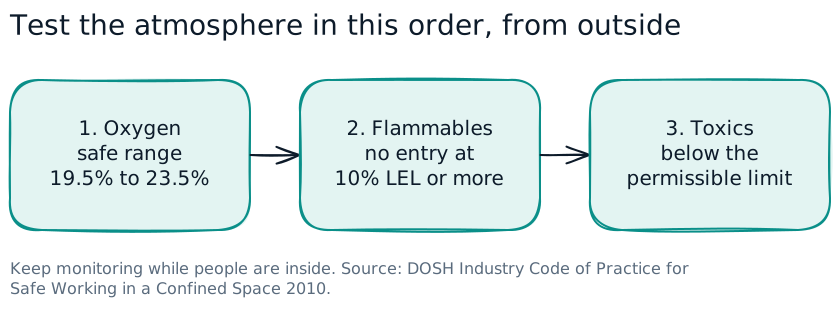
The AGT tests the atmosphere from outside the space before anyone enters, and records the results on the permit. The order is fixed: oxygen first, then flammable gases and vapours, then toxic gases and vapours. Oxygen comes first because a standard catalytic flammable sensor can give false readings when oxygen is low. Test remote parts of the space and different heights where gases can layer.
The ICOP treats an atmosphere as hazardous if any of these apply:
| Check | Hazardous when | Key rule in the code |
|---|---|---|
| Oxygen | Below 19.5% or above 23.5% by volume | Never use oxygen to ventilate a space |
| Flammable gas | Above 10% of the lower explosive limit (LEL) | No entry at 10% LEL or more unless with positive-pressure air-supplied breathing apparatus under the inert-entry rules; no hot work above 1% LEL |
| Toxic gas | At or above its permissible exposure limit (PEL) | Use the PELs in the chemicals regulations made under the OSH Act |
| Other | Any condition immediately dangerous to life or health (IDLH) | Do not enter |
Ventilate continuously while people are inside and keep monitoring, because conditions change as sludge is disturbed or work starts. If a hazardous atmosphere is detected during the work, everyone leaves at once and the entry supervisor cancels the permit. Common culprits include hydrogen sulphide from sewage and effluent, carbon monoxide from engines, and nitrogen or other inert gas used for purging. The Chemicals & H2S lesson covers how H2S behaves.
Standby person, rescue plan and the would-be rescuer
The code warns that the instinct to go straight in after a collapsed worker can cause multiple fatalities, killing the rescuers as well as the person they meant to save. The Lenggong case followed that pattern: the first worker entered and collapsed, the second went down to help and collapsed, and the third collapsed trying to help.
The ICOP's defences:
- The standby person stays outside and does nothing that distracts from watching the entrants. They order evacuation when they see a prohibited condition, signs of exposure, a danger outside or an alarm, and summon rescue as soon as help is needed. They perform non-entry rescue only.
- Entrants in a hazardous atmosphere wear a harness with a lifeline tended from outside, unless the risk assessment shows a lifeline would be unsafe, and carry an escape set. Retrieval systems should be used to allow rescue without entry.
- Air-supplied breathing apparatus is ready at the entrance for rescuers, and the minimum rescue team is two.
- Rescue team members are trained in the rescue course certified by the Fire and Rescue Department (BOMBA), in first aid and CPR, are certified fit, and practise a simulated rescue at least once every 12 months.
- If you rely on an outside service, tell them the hazards, give them access to your spaces to plan and practise, and confirm they are available before entry starts.
Rehearse the plan for the actual space. The Confined Space Entry lesson lets staff practise gas testing, standby duties and the rescue decision in a 3D tank and pit scene, where going in after a casualty without breathing apparatus has visible consequences.
Practise it in WorkQuest2U
Short 3D lessons where staff walk the scene, spot the issues and make the calls. Free to try, with certificates and progress records for companies.
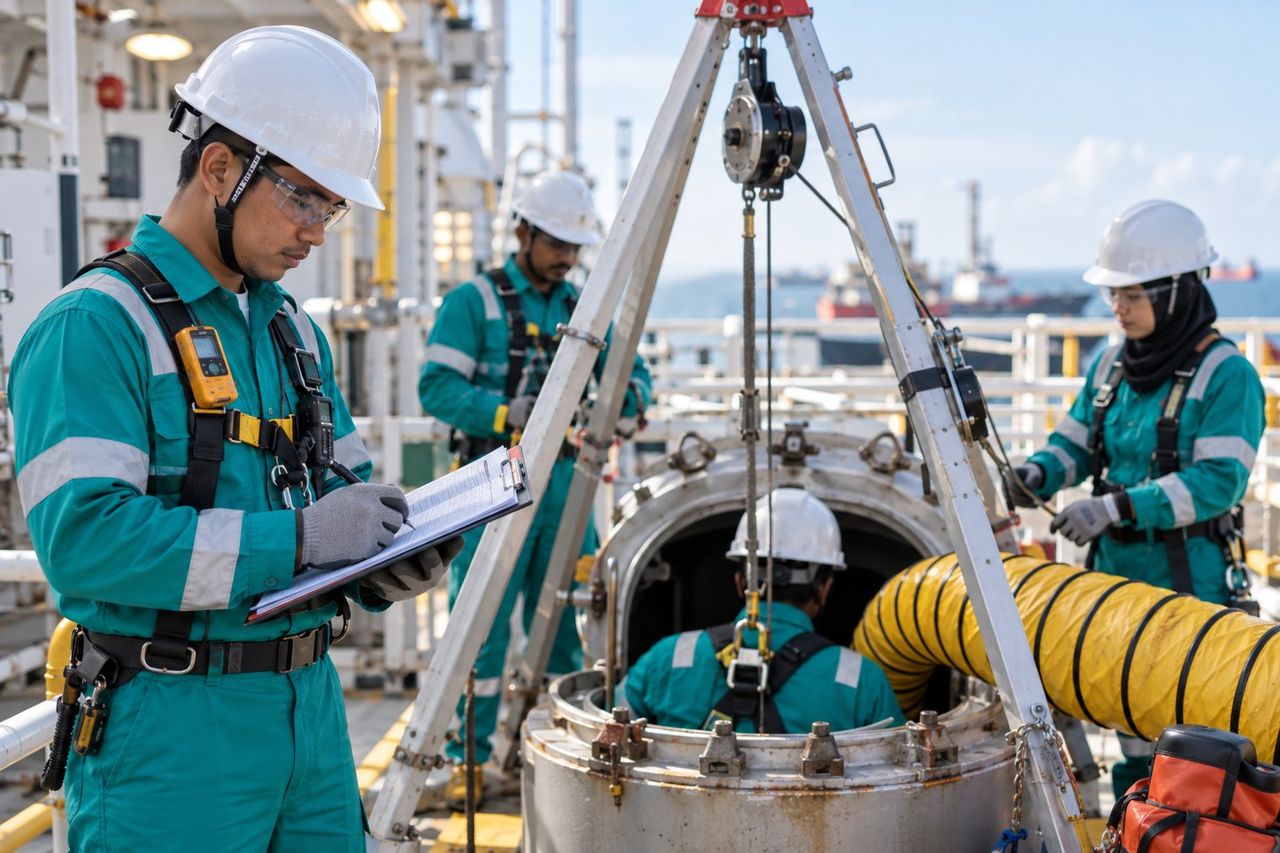 Health, Safety, Security & EnvironmentConfined Space EntryVessels, tanks and pits: why confined spaces kill, gas testing, standby, ventilation and rescue.
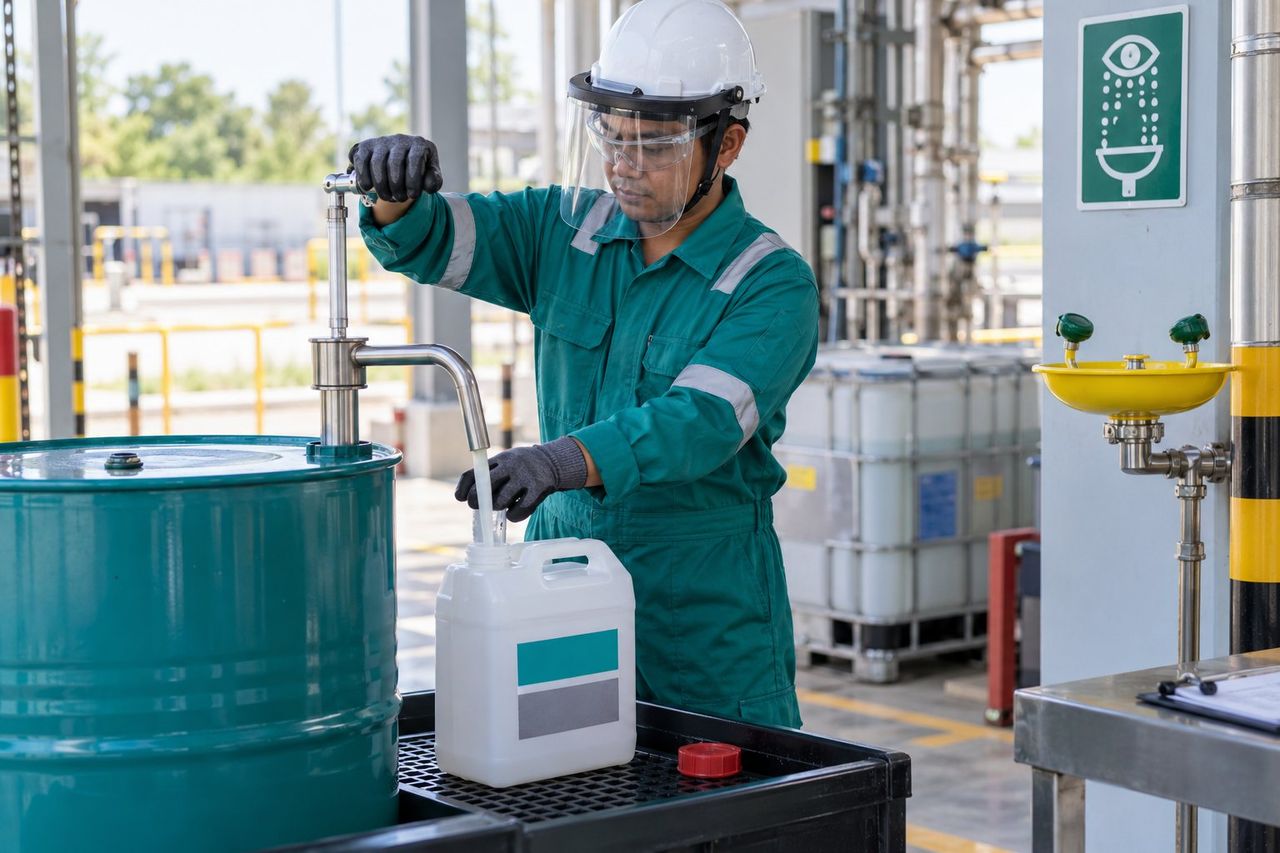 Health, Safety, Security & EnvironmentChemicals & H2SRoutes of exposure, SDS and GHS labels, chemical PPE, storage and decanting, benzene and deadly H2S: a hands-on chemical safety yard.
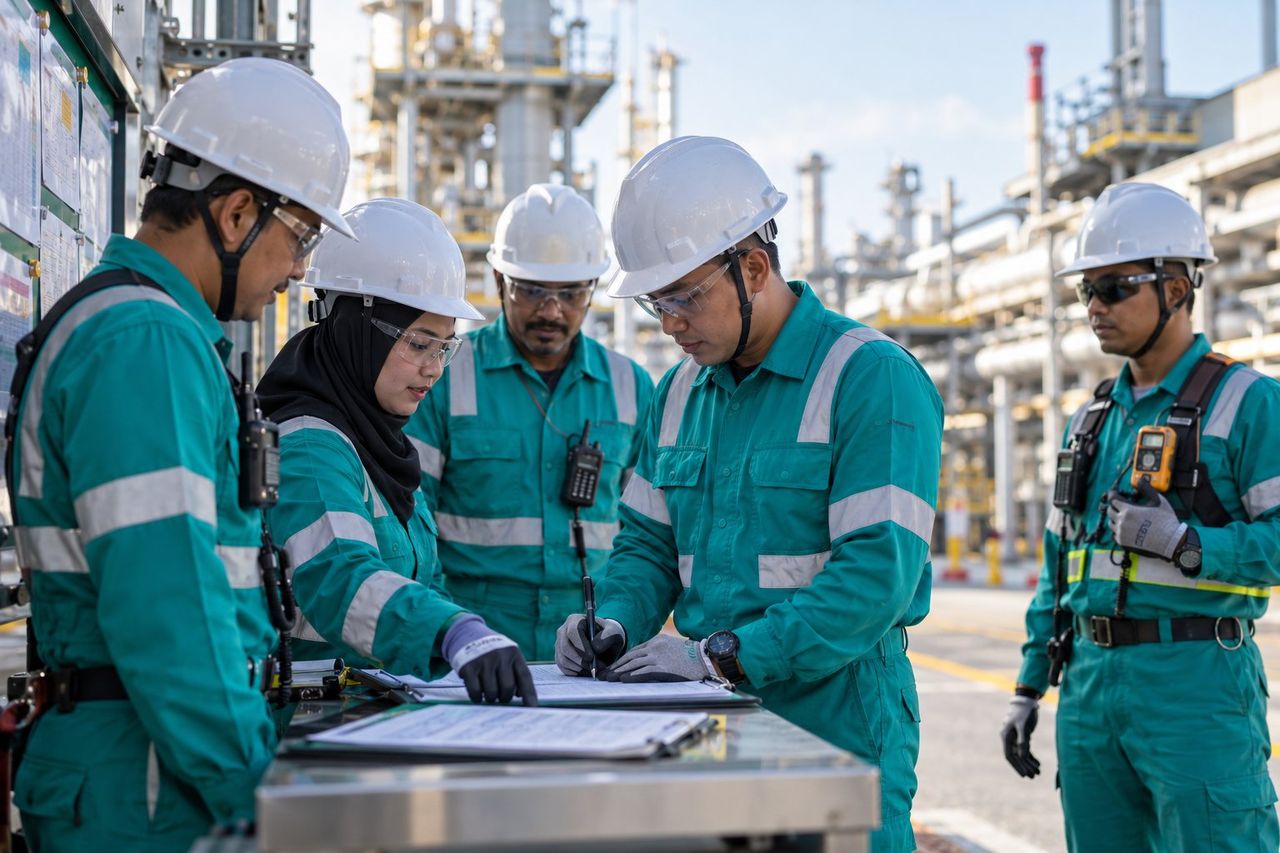 Health, Safety, Security & EnvironmentPermit to Work & Risk AssessmentHow high-risk work is authorised: permits, roles, JHA and the risk matrix, toolbox talks, handovers and SIMOPS.
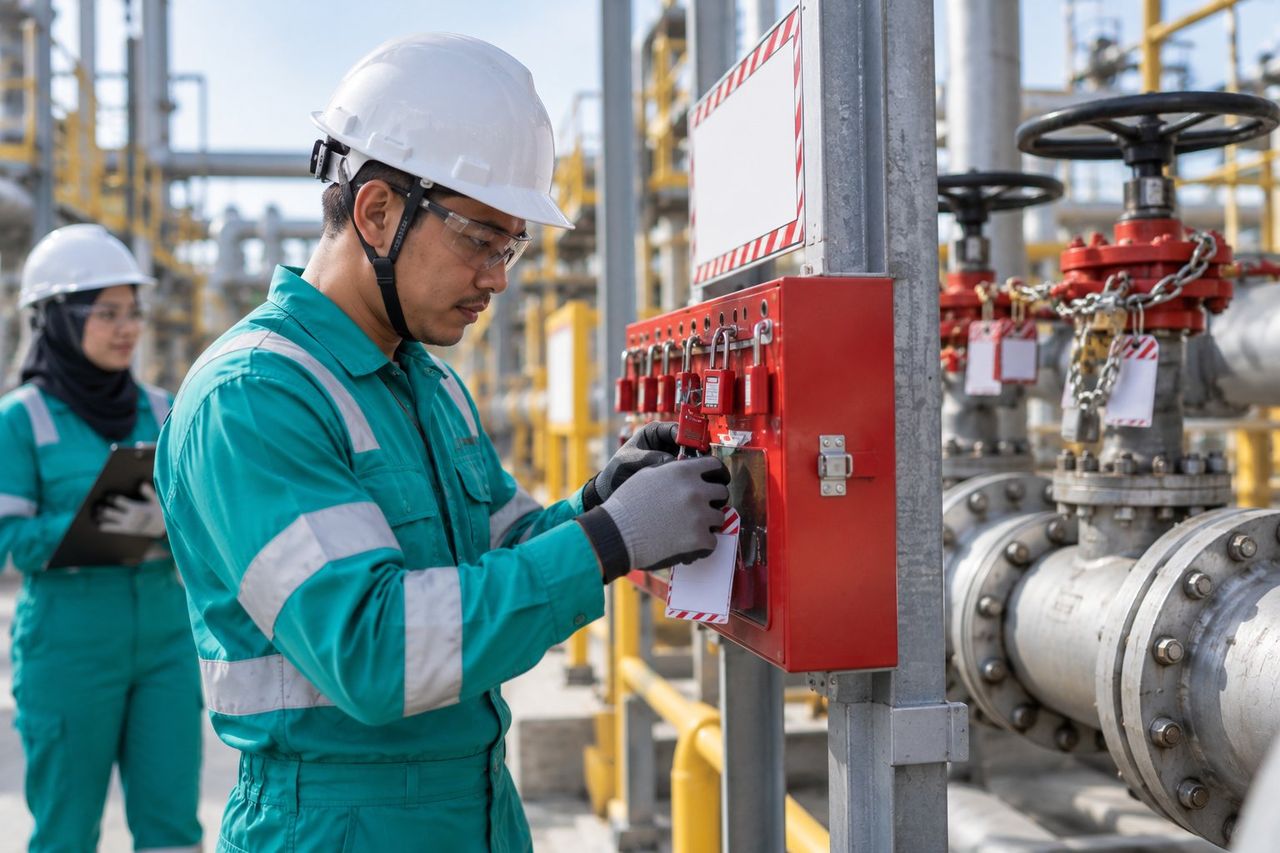 Health, Safety, Security & EnvironmentEnergy Isolation (LOTO)Lock, tag, try: find every energy source, isolate it, lock it and prove zero energy before anyone touches the equipment.
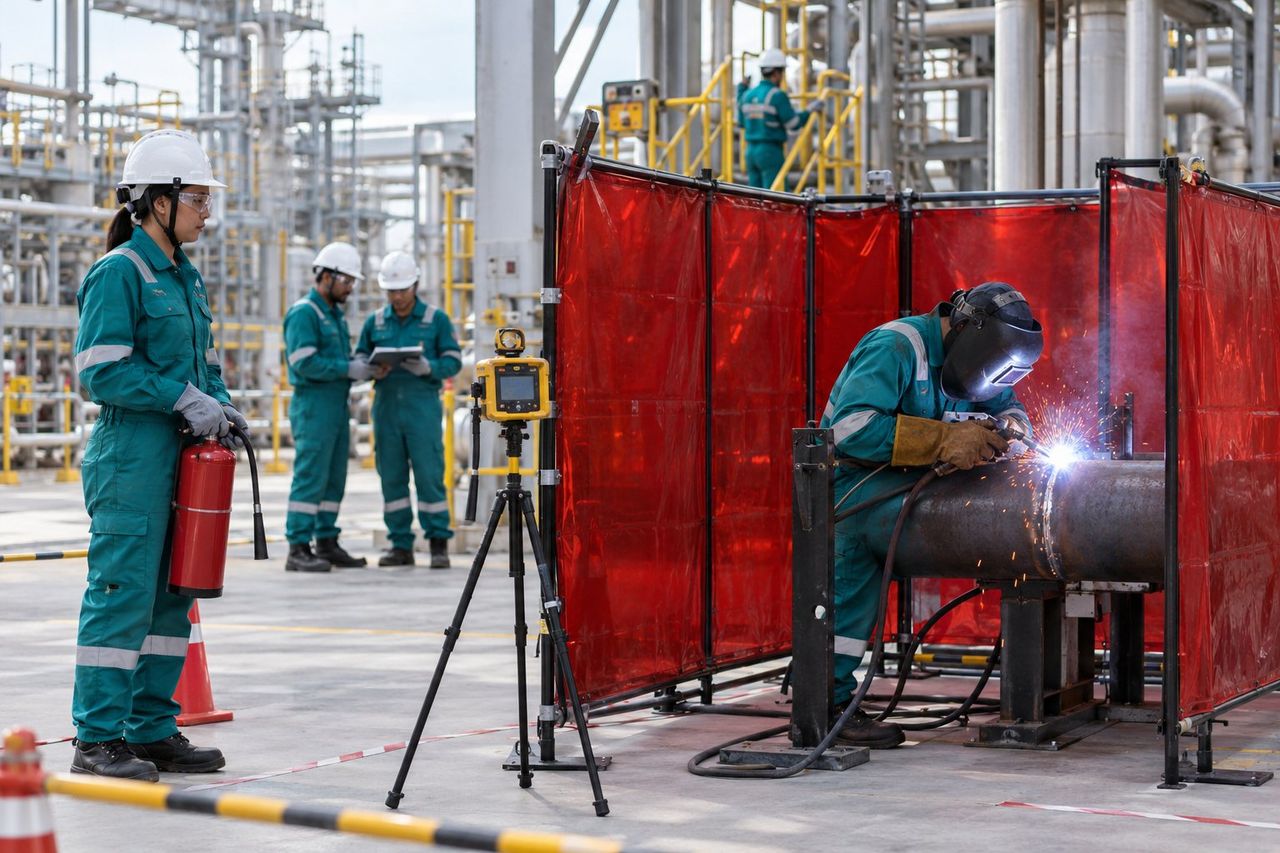 Health, Safety, Security & EnvironmentHot WorkWelding, cutting and grinding near hydrocarbons: permits, area preparation, gas testing, cylinders and the fire watch.
Frequently asked questions
What is AESP and AGT in confined space?
What oxygen level is safe for confined space entry?
What is the correct order of gas testing?
How long is a confined space entry permit valid?
Can the standby person enter the confined space to rescue someone?
Does looking into a manhole count as entry?
Sources
- DOSH: Industry Code of Practice for Safe Working in a Confined Space 2010 (full text)
- Occupational Safety and Health Act 1994 [Act 514], reprint as at 1 June 2024, sections 15, 18B, 19, 37 and 38 (DOSH)
- DOSH: Authorised Gas Tester / Entry Supervisor (competent person information)
- The Star (8 April 2025): Lenggong sewage tank deaths, DOSH findings and stop-work order
This guide is general information for workplaces in Malaysia, checked against the sources above on 30 October 2026. It is not legal advice; laws and guidelines change, so confirm the current text before you act.